
The complete guide
Choosing White 18 Count Aida Cloth for Your Next Project
Choosing cross stitch fabric is partly about the design and partly about how you like to work. A chart may look small on a screen, yet need far more cloth once you add space for a hoop, a border and a frame. Fabric count changes the finished size too.
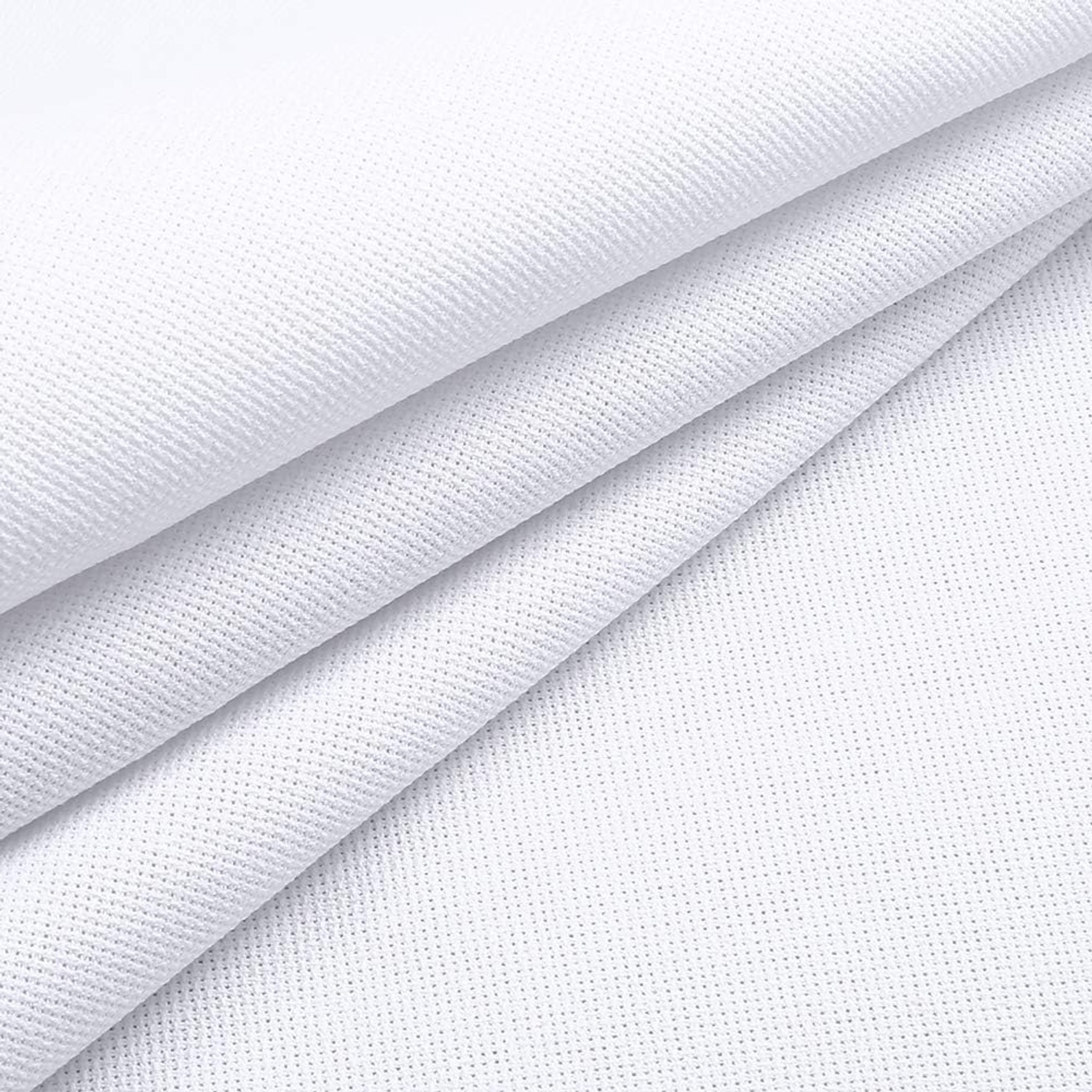
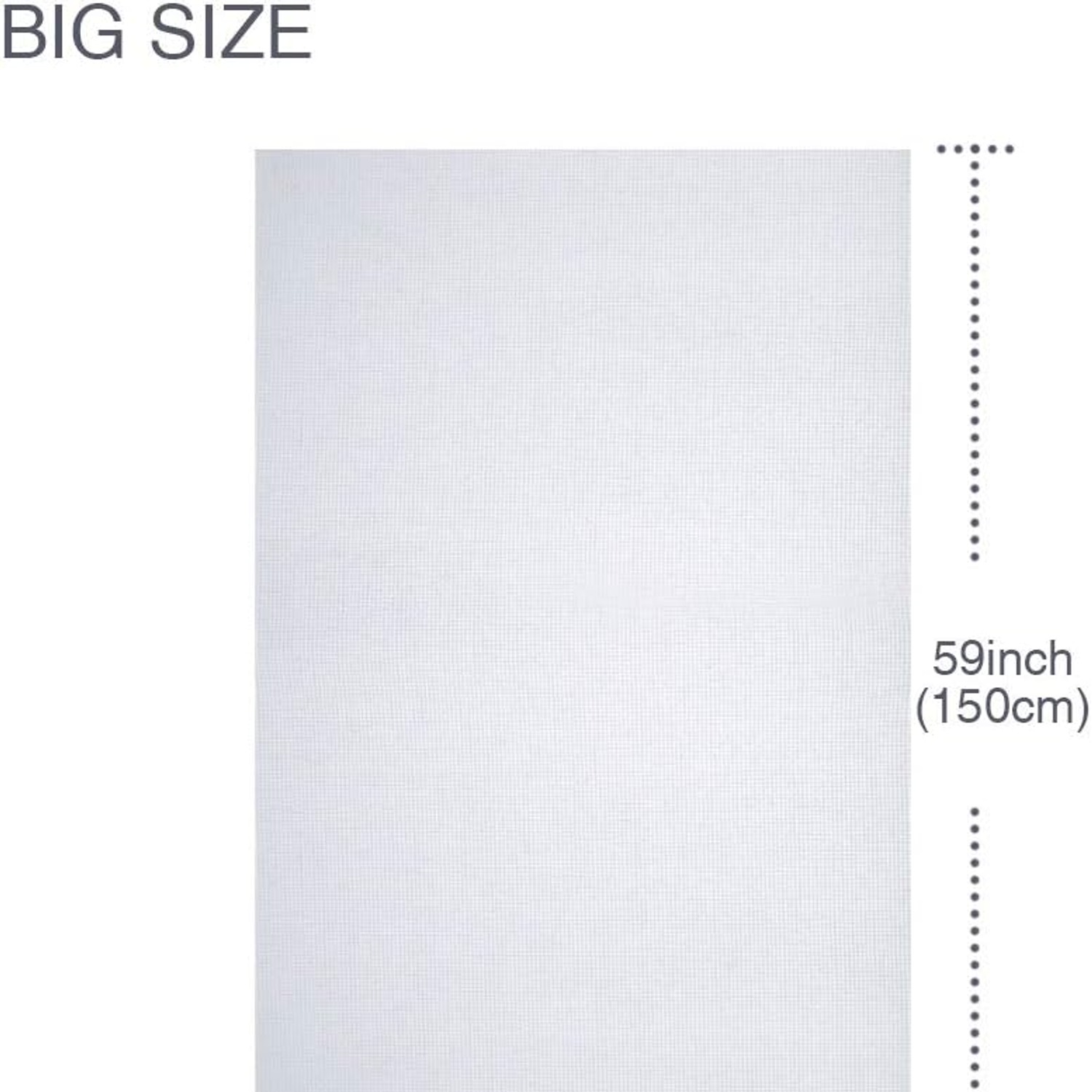
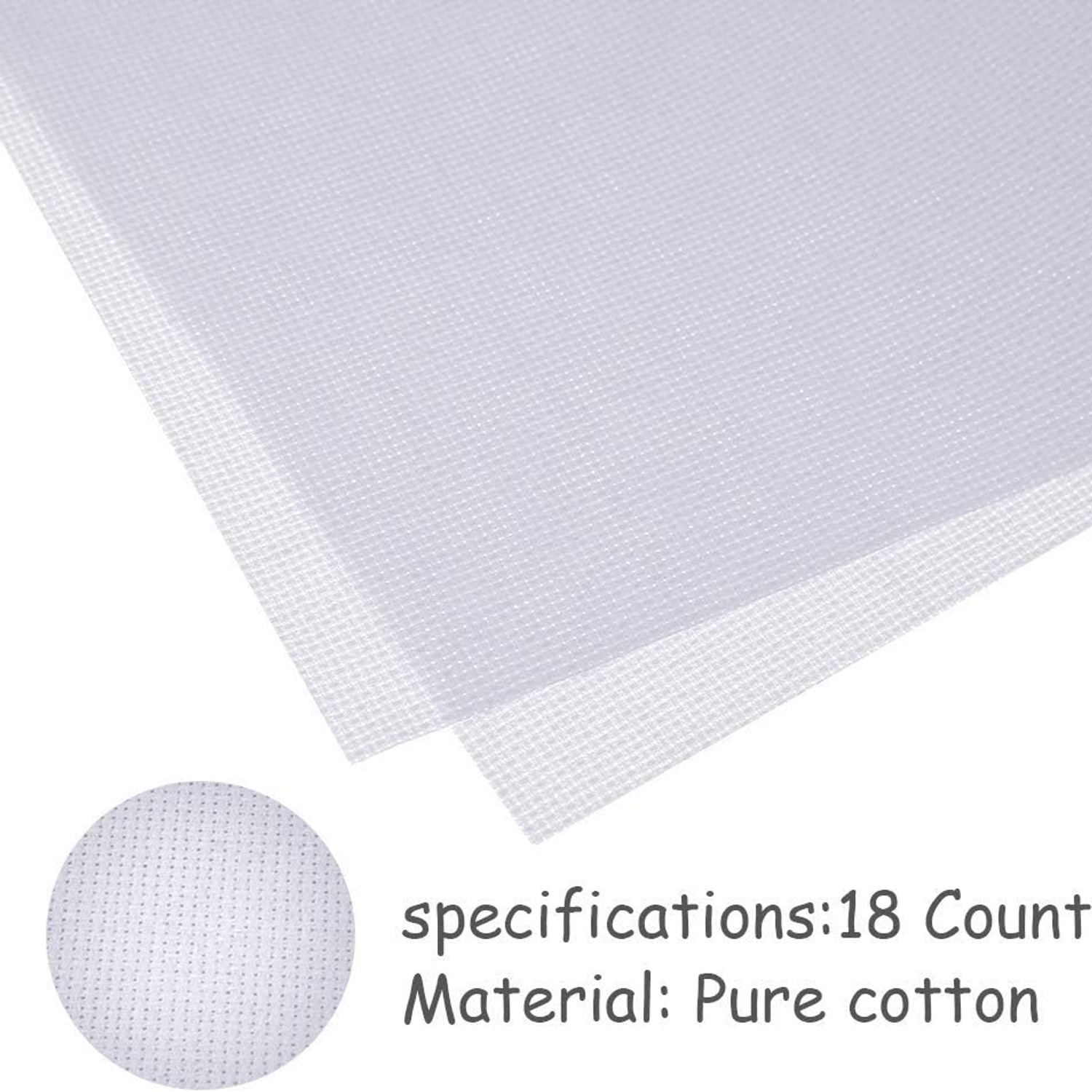
This white Aida cloth is supplied as one piece measuring 1 metre by 1.5 metres. Its 18 count grid gives you a clear basis for planning. Before ordering, check that the grid feels comfortable to stitch and that your full project, including its margins, fits the piece.
What the 18 count grid means
Aida has a visible grid used for counted stitching. The count tells you how many squares sit within an inch. With 18 count Aida, there are 18 squares per inch.
For standard cross stitch worked over one square, each square holds one cross. That means a chart measuring 180 stitches across would have a stitched width of 10 inches on this count. This is a calculation example, not a suggested project size.
On 18 count cross stitch fabric, a design will be smaller than on 14 count when worked in the same way. The number of stitches stays the same, but the space they occupy changes.
Check the chart before choosing cloth
Start with the chart's stitch dimensions, not just its stated finished size. Find the width and height in stitches, then divide each by 18 to work out the stitched area in inches.
Next, think about everything outside the design. You need cloth to hold while stitching and enough for the final finish. A framed picture may need a different allowance from a small sewn item. Ask your framer or follow your finishing instructions before setting the margins.
If a pattern includes speciality stitches, read those instructions as well. Some designs depend on a particular fabric structure. Aida fabric for cross stitch should suit the actual stitches in the chart, not only its overall measurements.
Plan the whole piece before cutting
The supplied piece measures 1 metre by 1.5 metres.
For one large project, map out the stitched area and all surrounding allowances. Keep your units consistent. Convert measurements before comparing a chart calculated in inches with fabric measured in metres.
If you want several smaller projects, sketch their positions on paper first. Include the margins around every design, not just the stitched shapes. A gap that looks unused may be needed for mounting or sewing later.
A large Aida cloth piece can offer layout choices, but the number of projects it holds depends on your plans. Do not assume that dividing the total area by one design's area will give a workable cutting layout.
Decide whether the finer grid suits you
The right count is one you can see, count and stitch without undue strain. An 18 count grid has smaller squares than a lower-count fabric. Some stitchers enjoy that scale, while others prefer more space between holes.
If you are new to counted cross stitch cloth, consider how comfortable you are following small rows. Good task lighting can help. Take breaks when counting becomes tiring rather than pushing on and risking mistakes.
Experience is not the only factor. A confident stitcher may choose a larger grid for a relaxed project, while a beginner may be happy working at 18 count. Your comfort matters more than treating one count as a skill level.
Think about the white background
White Aida cloth gives you a white base wherever the design leaves fabric uncovered. That background is part of the finished picture, even when it seems less important than the threads.
Look at the chart's open areas. A lightly stitched sampler may show a lot of cloth, while a full-coverage picture may show very little inside the design. The border will still matter if you leave one visible.
Compare pale thread colours with the background before starting. A light shade may be meant to create a subtle detail rather than a strong contrast. If the chart calls for a different background colour, think through that change instead of assuming the result will look the same.
Match your tools to the project
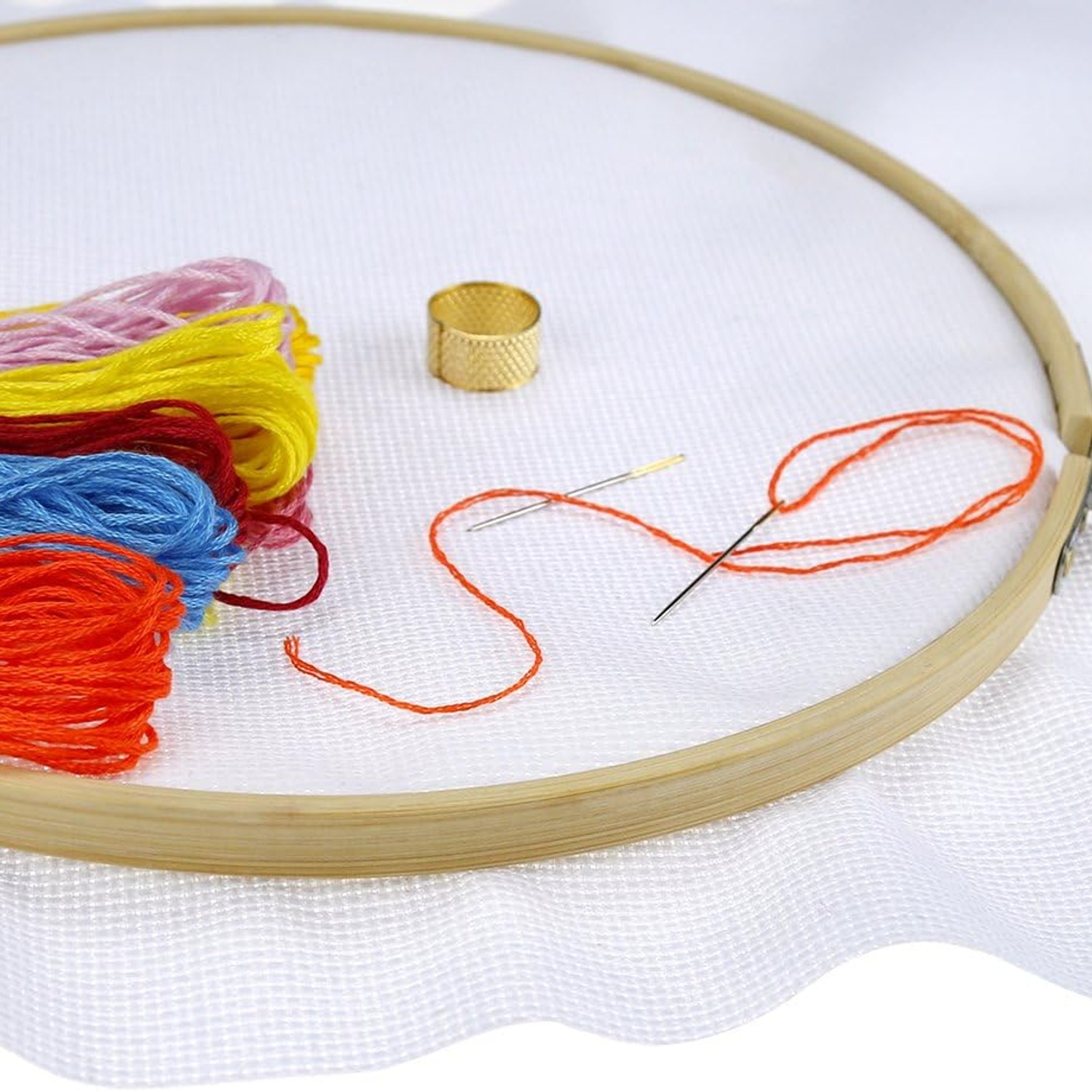
This is cloth. It does not list needles, threads, a hoop or a pattern as included, so plan those separately.
Choose a needle that passes through the grid without forcing the holes apart. Thread thickness also affects how each cross sits. Follow the chart's strand guidance as a starting point, then test if you are unsure about coverage.
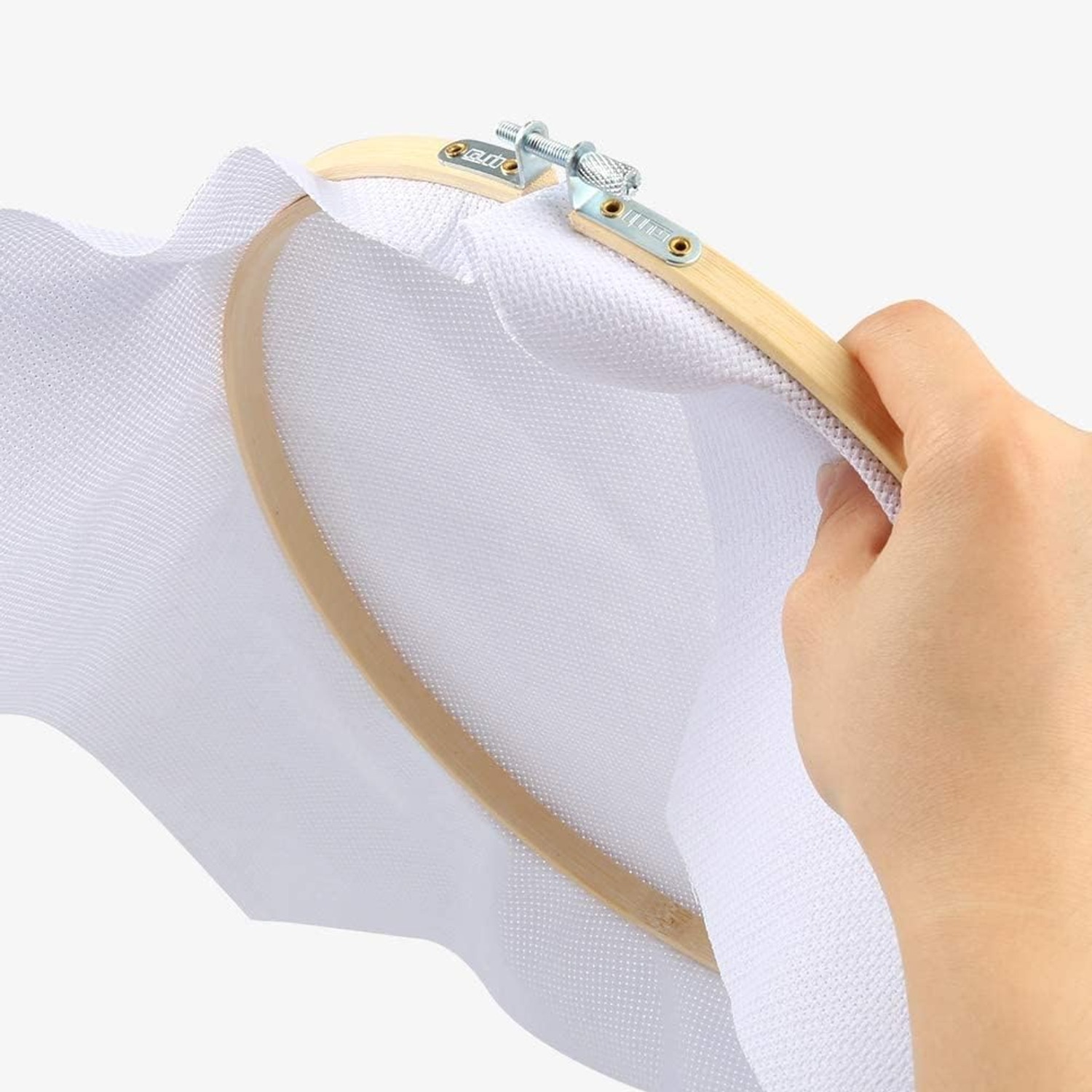
A hoop or frame can help hold the working area steady. Keep the fabric supported without pulling it out of shape. For a larger piece, think about how you will keep the unused cloth clean and out of the way as you stitch.
Avoid choosing tools only because they worked on a previous fabric count. Small changes in the grid can change how the same needle and thread feel.
Start with a clear layout
Once you have checked the fabric and decided to keep it, confirm the design position before making cuts. Find the centre or starting point required by your chart, then check the distance to each edge.
For lettering or a sampler, check the complete width rather than judging it from the first row. A border added later can take more space than expected. Include all chart sections in your measurement from the start.
If you mark the fabric, choose a method suited to your materials and test it first. Do not assume every pen or pencil will wash out. Counting carefully from a known point is more useful than adding marks you cannot safely remove.
Allow for the final finish
It is easy to focus on the stitched image and leave the finishing decision until later. That can lead to a piece with too little spare cloth around it.
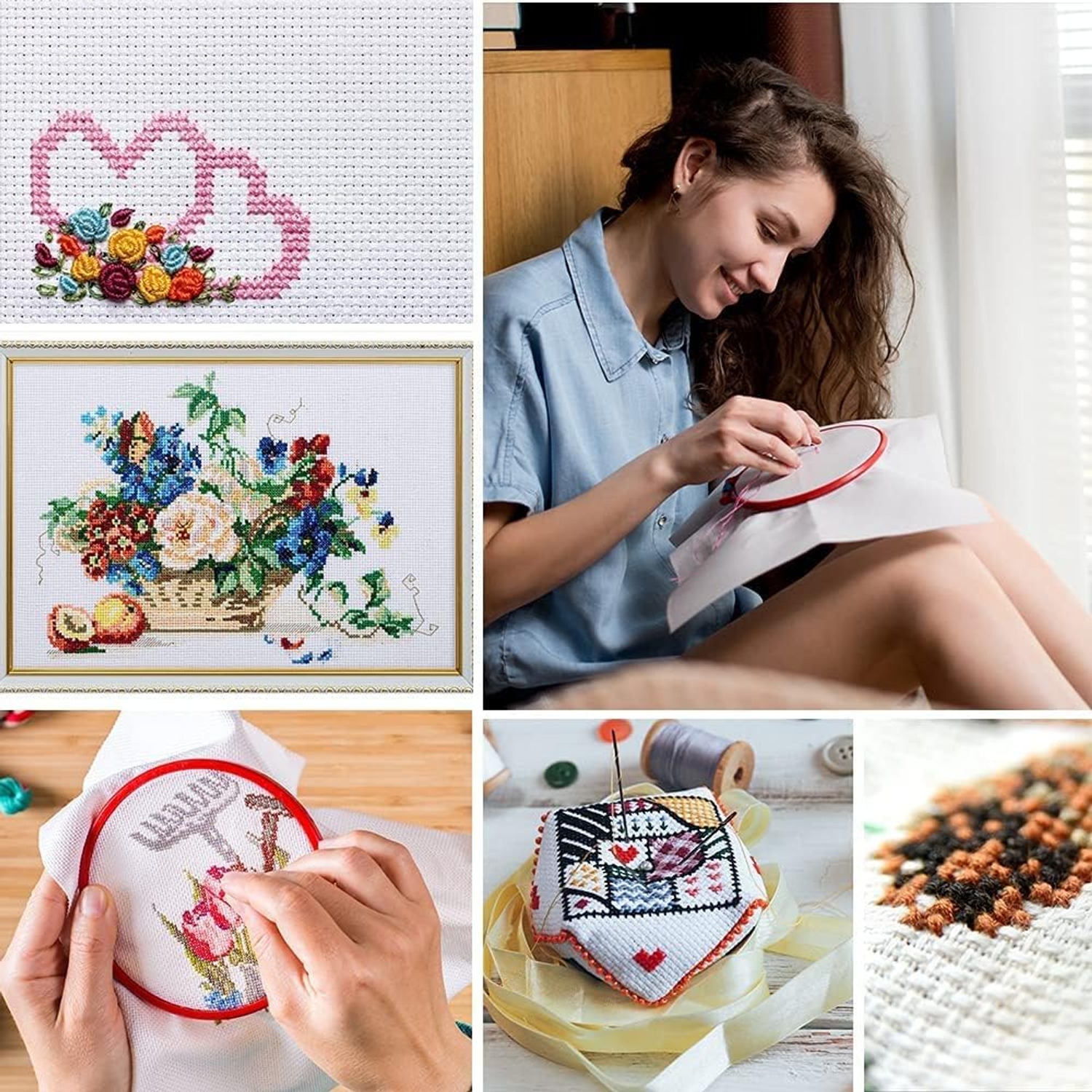
For Aida cloth for framing, ask how the work will be mounted. The fabric beyond the visible image may be needed to hold the piece in place. A close cut cannot be undone.
If you plan to sew the work into another item, include seam allowances and any edge treatment. Keep these separate from decorative borders when doing your sums. A visible border is part of the design, while a seam allowance serves a different purpose.
Planning the finish early does not mean you must choose every detail now. It means leaving enough room for the finish you have in mind.
Know which details are not stated
The maker gives the fabric type, white colour, 18 count grid, piece size and quantity. The maker does not state the fibre composition, fabric weight or country of origin in the maker's description.
Those gaps matter if you need a particular fibre or a certain care method. Do not assume a composition from the word Aida or from the appearance of white embroidery fabric in a photograph.
Washing and ironing settings are also not stated. If a project has strict material needs, ask for clarification before ordering. It is better to settle an important requirement before stitching than to discover the uncertainty after finishing.
Care for the cloth as you work
Keep your work area and hands clean. Store the unused portion where it will not pick up dust, moisture or colour from another item. Protect loose edges from catching on tools or storage surfaces.
Before washing a finished project, check both fabric guidance and thread care instructions. Different threads or added details may need different treatment. Test colourfastness rather than assuming all colours will behave alike.
The maker does not give a wash temperature or ironing setting here. Avoid choosing one by guesswork. If you receive care guidance with the cloth, keep it with your project notes so it is available when the work is finished.
Check suitability before use
When the cloth arrives, check it against your intended project before washing, cutting or stitching.
We sell in Ireland, but the maker's description does not give a delivery lead time. Check the delivery information when ordering, especially if you are planning a gift or working towards a date.
Returns are accepted within 14 days from delivery for fabric that is unwashed, uncut, unused and in its original packaging. The customer pays return postage. Faulty or wrongly described goods are put right free of charge.
The short version
Choose this cross stitch project fabric if you want one white piece of 18 count Aida measuring 1 metre by 1.5 metres. Calculate the stitched area from your chart, add the right finishing margins and check the whole layout before cutting.
The key choice is whether the count suits both your design and your comfort. Once those fit, you can plan the first stitch with a clear idea of where the last one will land.