
The complete guide
Choosing and Using Medium Weight Iron-On Interfacing
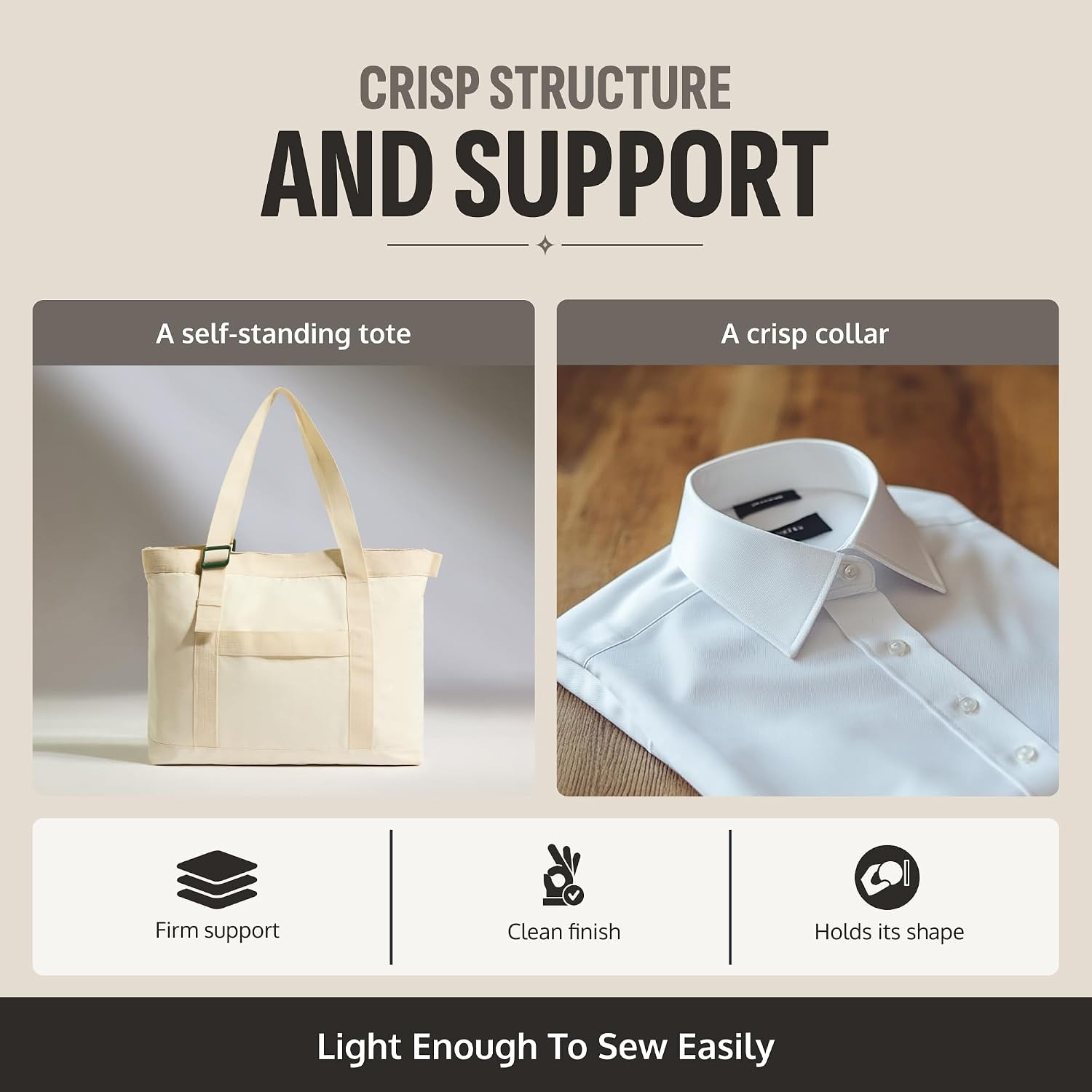
A collar can be sewn neatly and still feel too soft. A waistband may need more hold, or a tote bag may fold in on itself when you wanted a clearer shape. In these cases, the outer fabric is only part of the picture. The layer behind it matters too.
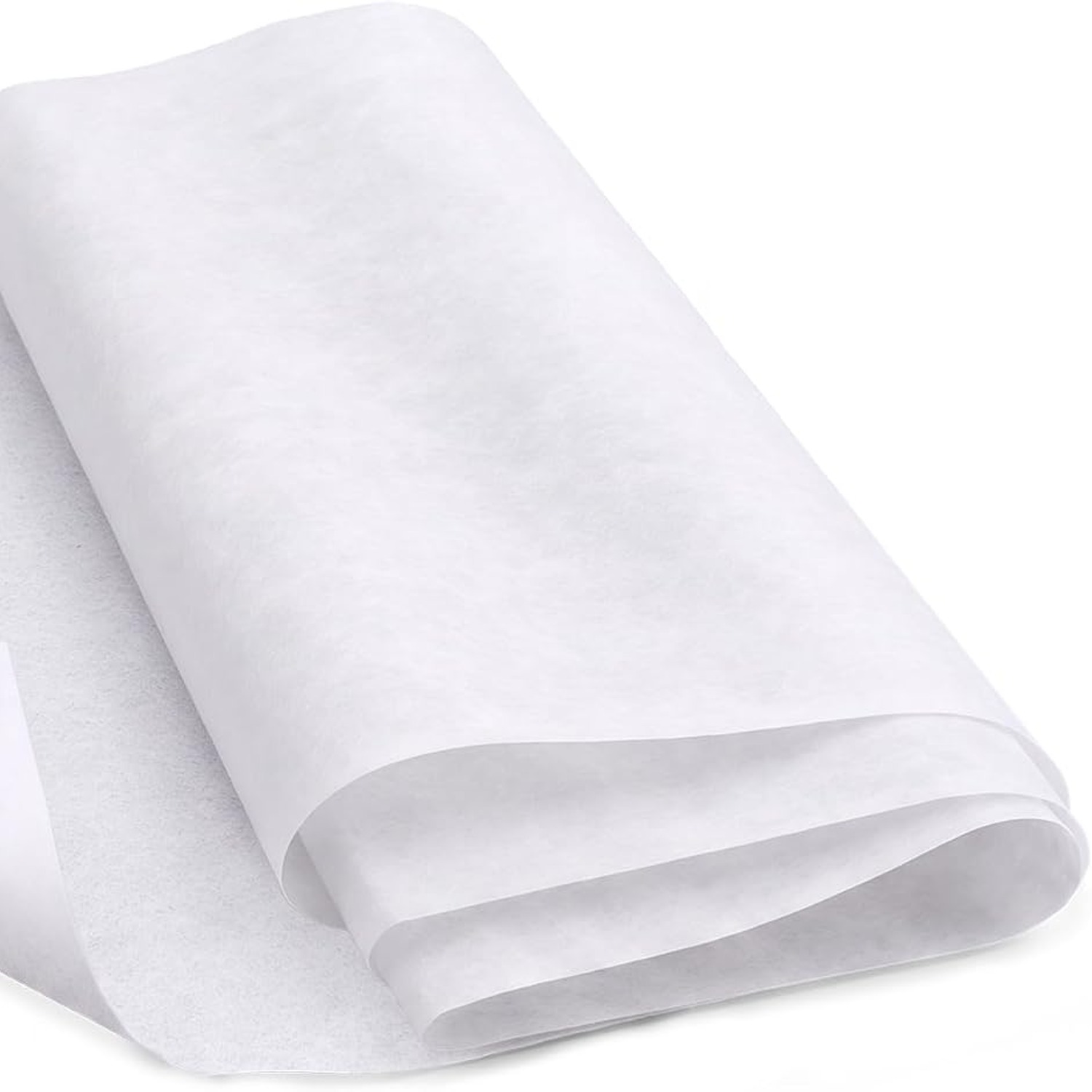
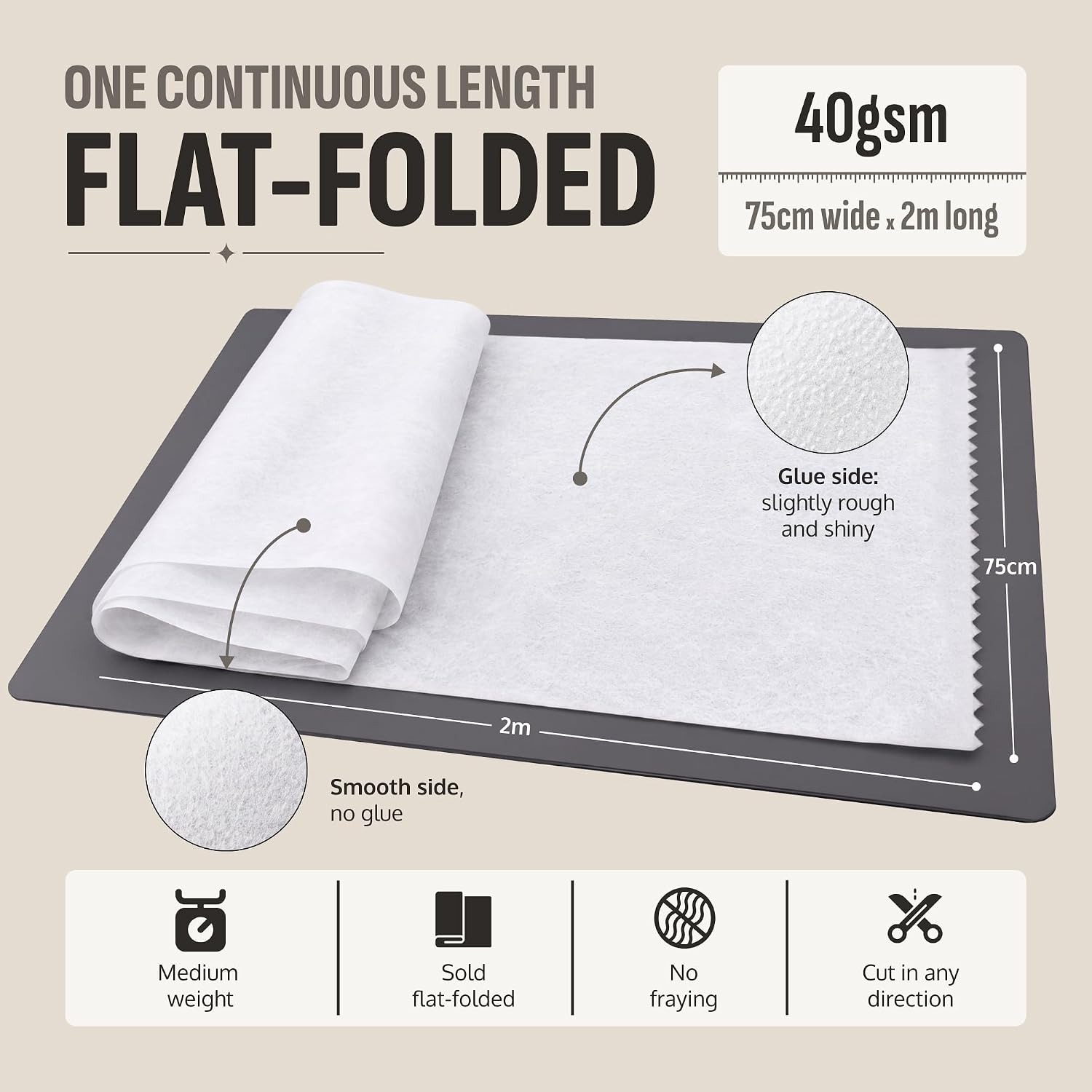
Iron on interfacing adds support where a sewing project needs it. This medium weight option comes as one white, non-woven polyester piece measuring 75 cm wide and 2 m long. It is intended for garment details and fabric crafts, with a single-sided fusible backing that attaches using an iron.
Choosing well starts with the result you want. A soft blouse facing and a firm bag base do not need the same feel, even if both need support. Here is how to judge whether this pack fits your project and how to approach the first test.
What interfacing changes
Interfacing sits behind the main fabric to give a selected area more body. It can help a collar keep its outline or make a cuff feel more defined. It can also support a facing, where the inside edge of a garment needs some control.
That does not mean every part of a project needs it. Your pattern may call for support in only a few places. Adding it more widely can change how the fabric hangs and feels, so follow the pattern unless you have a clear reason to adjust it.
Think of interfacing as part of the fabric choice rather than a last-minute extra. Two samples made from the same outer fabric can feel quite different once different backing materials are attached. A small test tells you far more than the word “medium” alone.
What is included in this pack
You receive one continuous pre-cut piece, 75 cm wide and 200 cm long. Plan your cutting layout around that fixed width and length.
The product details describe white polyester with a non-woven construction. The maker's description identifies this as the medium weight option and gives an item weight of 75 g. The item weight should not be treated as a grams-per-square-metre specification.
The listed dimensions give you a useful starting point for estimating coverage. Still, the number of pieces you can cut depends on their shapes and layout. Lay out your pattern pieces before assuming the pack will cover several projects.
Decide how much support you need
Start with your pattern's recommendation. If it asks for medium weight fusible interfacing, this product is in the right general category. If it asks for woven, stretch or sew-in interfacing, do not assume that a non-woven fusible option will behave the same way.
Next, consider how the finished area should move. A collar needs enough body to look intentional, but you may still want it to feel soft against the neck. A tote bag may need more support than a garment facing, especially if you want a firm shape.
This is why a bonded sample is so useful. Feel it, bend it and compare it with the untreated fabric. Ask whether it gives the support you want without making the project feel too stiff. The right choice is the one that suits the design, not simply the firmest backing available.
Check your outer fabric first
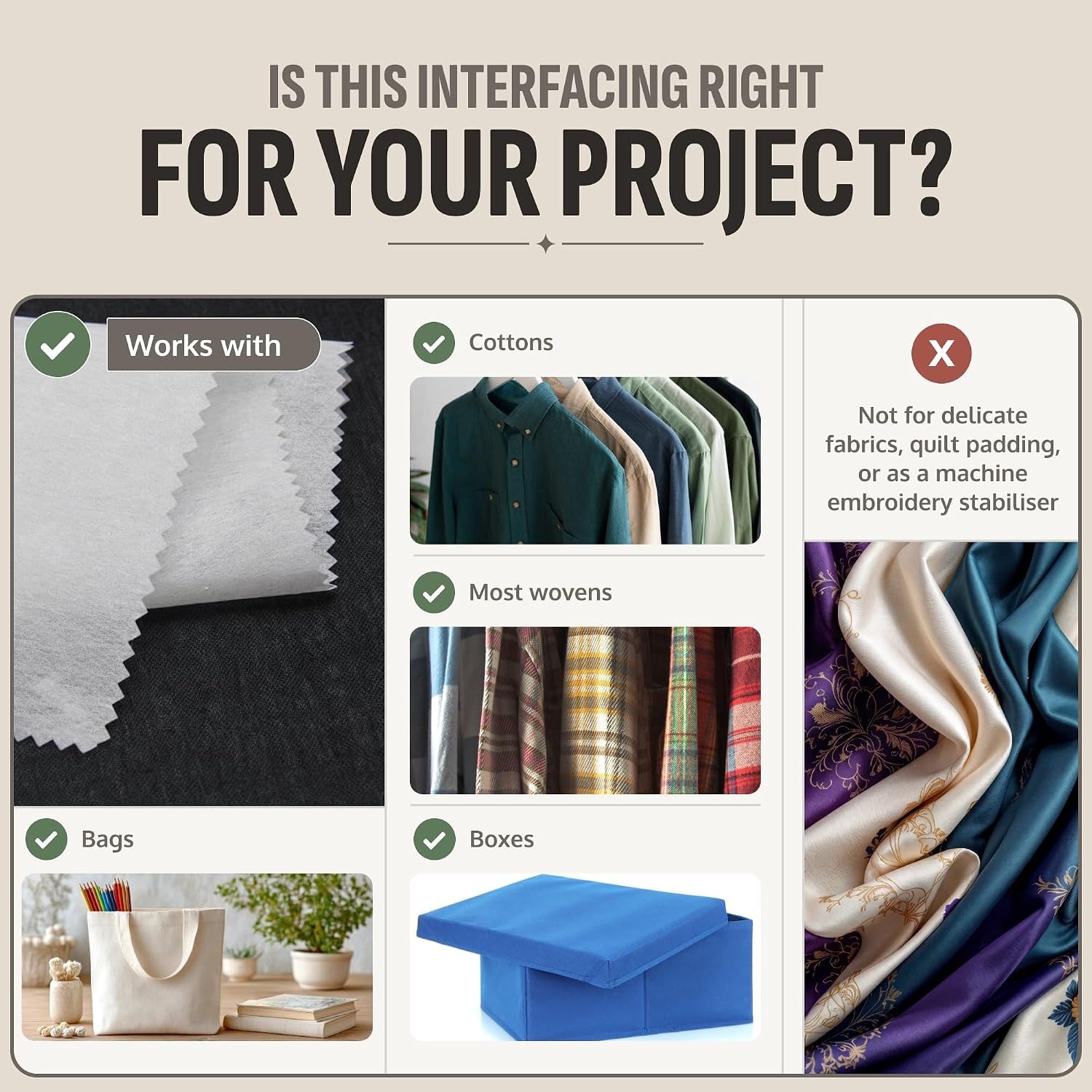
The maker's details lists cotton, linen, denim and woven fabrics as suitable starting points. That is not a promise that every fabric in those groups will respond in the same way. Finishes, thickness and heat tolerance can vary.
Before using polyester interfacing on the final pieces, check whether your outer fabric can tolerate the required heat. The application guidance calls for a hot dry iron, but it does not state a numerical temperature. A heat-sensitive fabric needs particular care.
Appearance matters as well as bonding. With thin or pale fabrics, check the sample from the right side in good light. White fusible interfacing may affect the look of a fabric, so make that check before committing to a large area.
Make a sample before cutting everything
Keep a scrap of the actual project fabric for testing. A different fabric from your scrap box will not tell you how the final combination behaves. Use a piece large enough to judge both the bond and the finished feel.
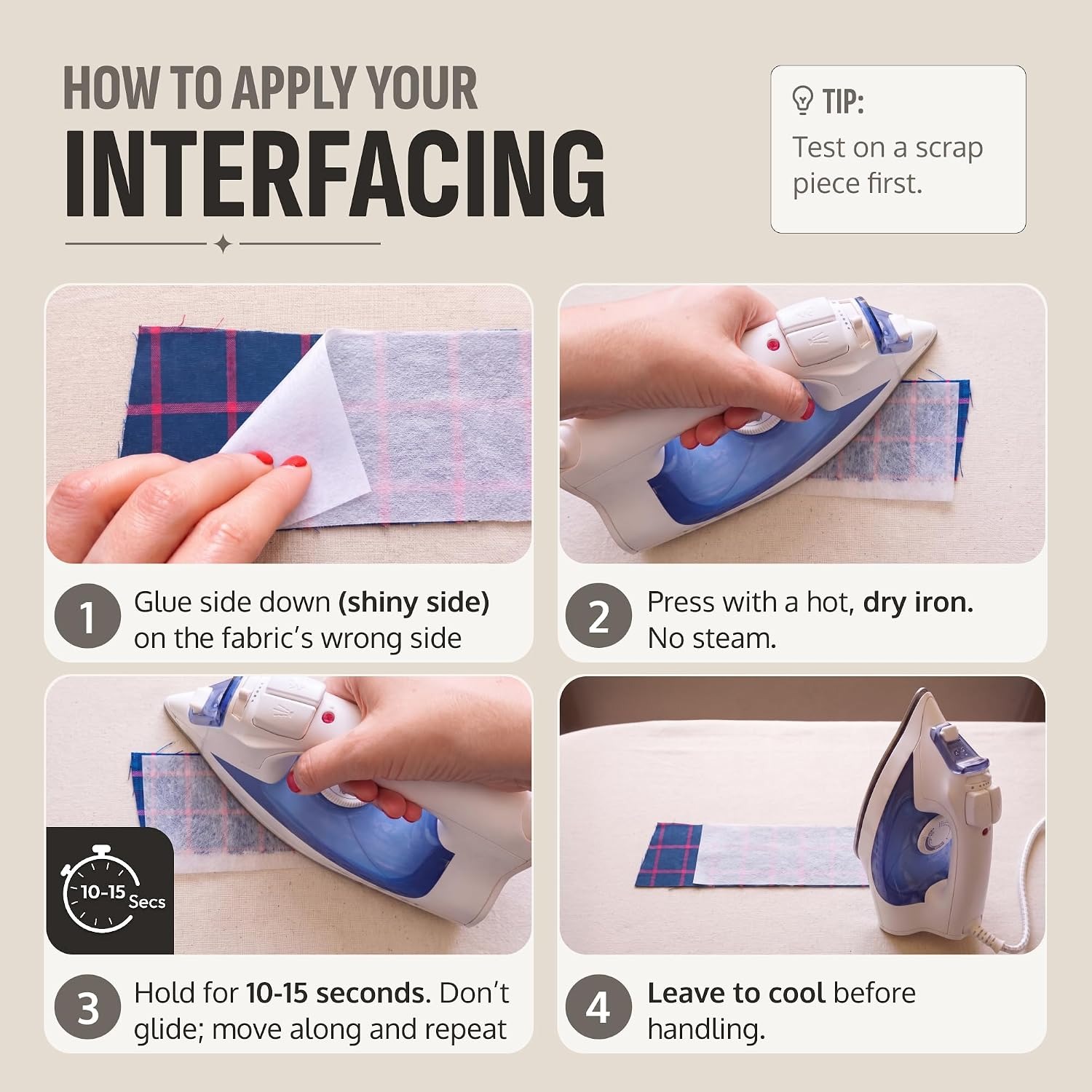
Identify the fusible side using any instructions supplied with the product. Position it against the wrong side of your test fabric. Make sure your work surface is appropriate for pressing and that the fabric can lie flat.
Follow the stated application method, then let the sample cool before handling it. Once cool, look at both sides and feel the result. Check for changes you would not want on the finished garment or bag. If the sample is unsuitable, stop there rather than trying the same method on your cut pieces.
Press, lift and let it cool
The supplied guidance calls for firm pressure with a hot dry iron for 10 to 15 seconds. Do not use steam. Hold the iron in place, then lift it and move to the next area rather than sliding it across the fabric.
Working this way lets you treat each section in turn. Take your time around edges and shaped pieces so that areas are not missed. Keep checking that your outer fabric is coping with the heat.
Cooling is part of the process, not an optional pause. Leave the work alone before lifting or bending it. If the backing does not stick, the reference guidance points to insufficient heat, steam or a sliding iron as possible causes. Recheck the test and method without pushing beyond the main fabric's heat tolerance.
Using it for garment details
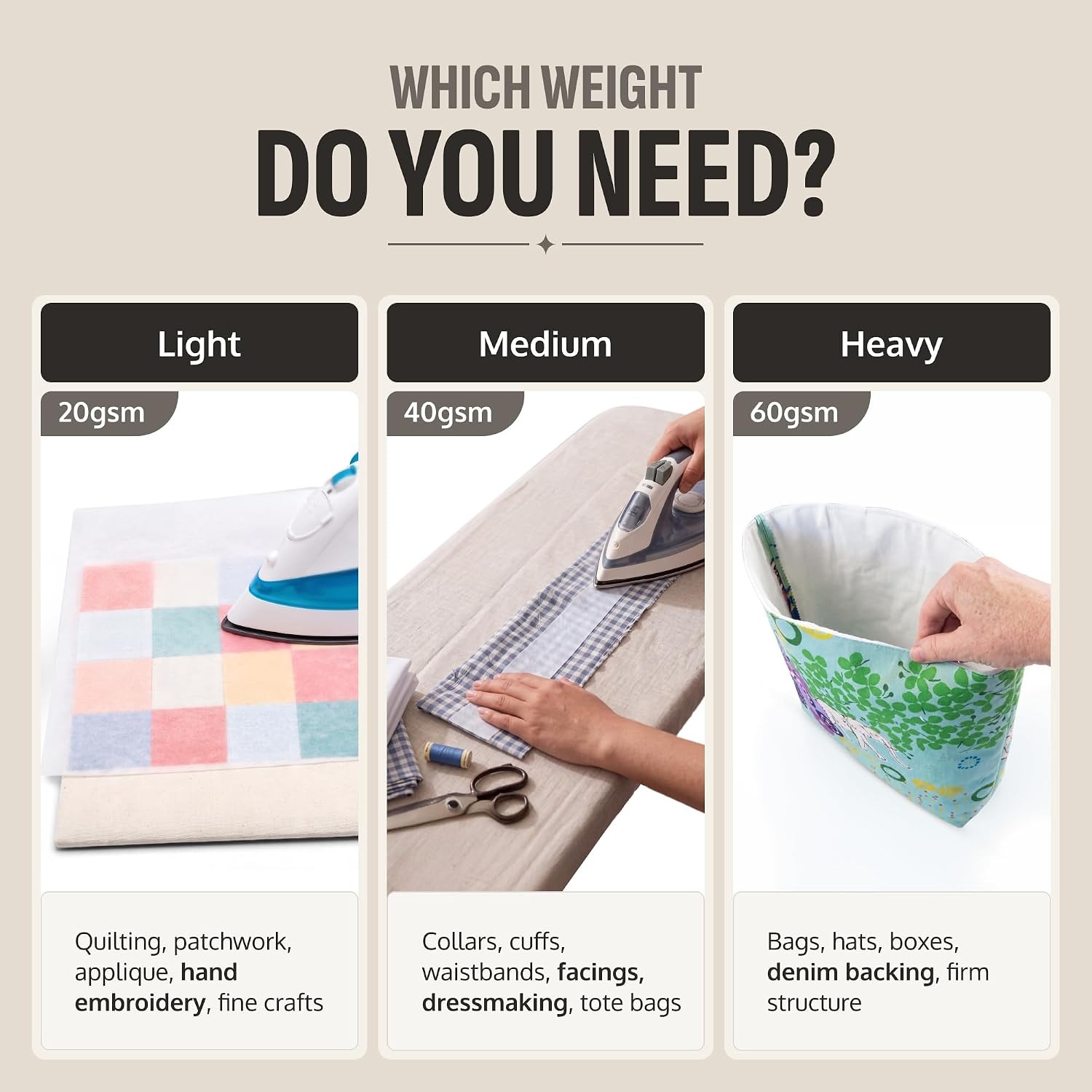
Collar interfacing is a good example of targeted support. The collar may need more definition than the body of the garment, so a backing layer can change that detail without changing the whole garment.
Cuffs, waistbands and facings are also listed applications. Use your pattern to decide which pieces receive interfacing and how they should be cut. Do not assume every layer of a collar or cuff needs backing.
For dressmaking interfacing, the feel against the body matters. Hold your cooled sample as well as looking at it. If it feels too firm for the garment you have in mind, reconsider the choice before sewing the supported sections into place.
Using it for bags and fabric crafts
The suggested uses extend to purses, tote bags, hats, costumes, aprons, cushions and fabric boxes. This gives you several possible uses for a remaining length, but each design still needs its own check.
For tote bag interfacing, compare the supported fabric with the shape you expect from the finished bag. Medium support may suit one design while another needs a different backing or extra structure. It is not a promise that any bag will stand upright.
The same applies to boxes and millinery. A listed use does not define the firmness of the finished object. Test a representative section and follow project instructions. This is interfacing rather than padded wadding, so choose it for support rather than cushioning.
Plan your cuts and keep useful offcuts
Before cutting, arrange the required pattern pieces within the 75 cm width and 2 m length. Check the pattern's cutting notes, including any instructions about seam allowances or placement. A little planning can prevent a small piece from using up space needed for a larger one.
Cut only after you are satisfied with the sample. This matters for both the project and the stated return terms, which require change-of-mind returns to be uncut and unused.
Keep useful offcuts together. Small pieces of iron on backing fabric may suit a later cuff, facing or craft detail, provided they meet that project's needs. Store them clean and dry, and keep the application instructions with them so you do not have to guess next time.
Care and ordering checks
Machine washing is listed in the product details, but no wash temperature or cycle is given. Your finished item also includes the outer fabric, thread and any trims. Choose care that suits the whole project, and test a bonded sample when the care result matters.
A delivery lead time is not specified by the maker, so avoid planning around an assumed arrival date.
The supplied returns terms allow 14 days from delivery for unwashed, uncut, unused fabric in its original packaging. The customer pays return postage for those returns. Faulty or wrongly described goods are put right free of charge.
The short version
This pack provides one 75 cm by 2 m piece of white, medium weight, non-woven fusible interfacing. It is an option for supporting garment details and a range of fabric crafts.
Match it to your pattern, test it with your actual fabric, and judge the cooled sample before cutting the full project. Use a dry iron, press without sliding, and allow cooling time. Those checks help you choose support that works with your fabric rather than against it.