
The complete guide
Choosing Heavy Fusible Interfacing for Sewing and Crafts
When fabric needs help holding its shape
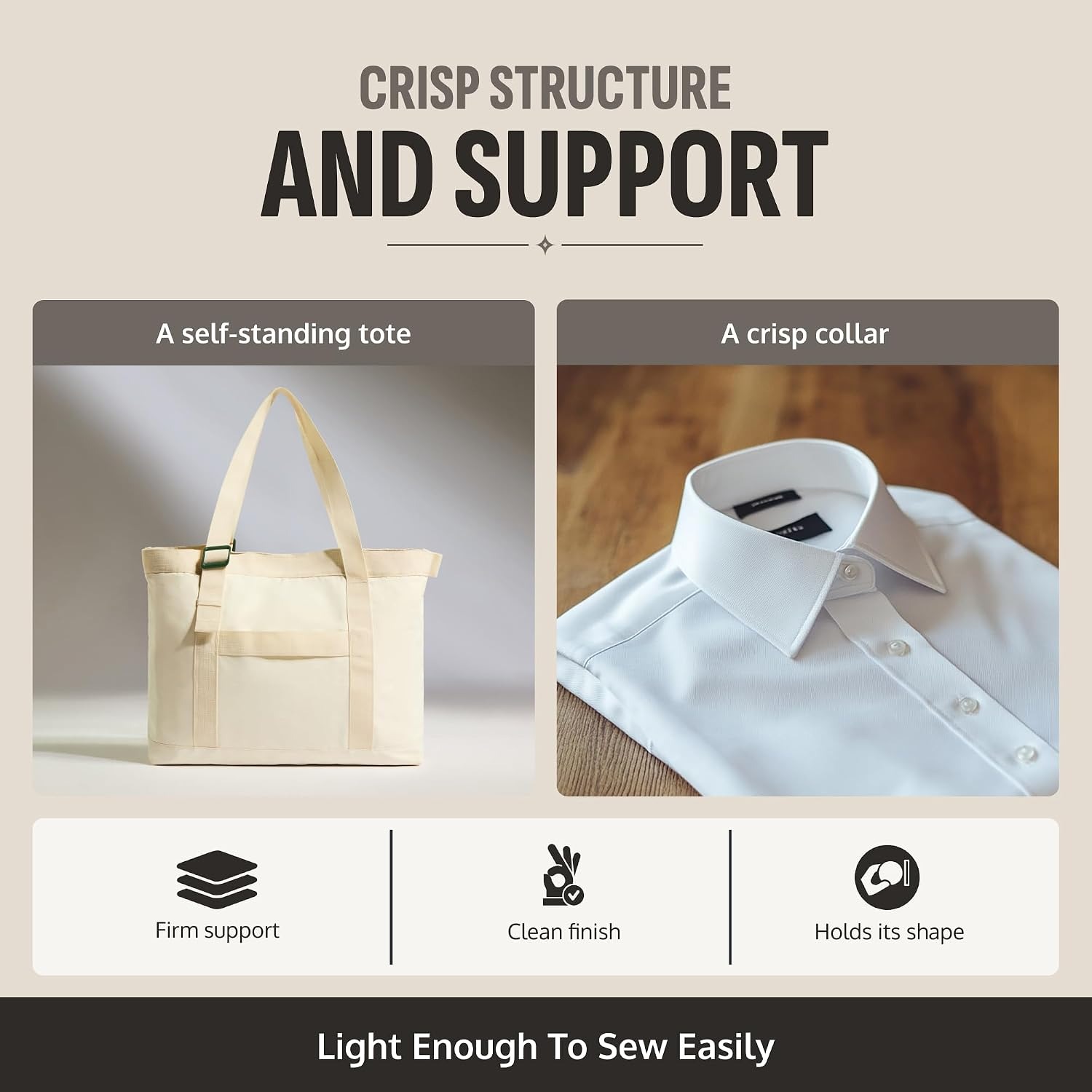
Sometimes a fabric looks right but feels too soft for the job. A purse may need more body, a collar may need a sharper edge, or a costume detail may need to stand away from the garment. Interfacing adds support behind the fabric so you can change how that area behaves.
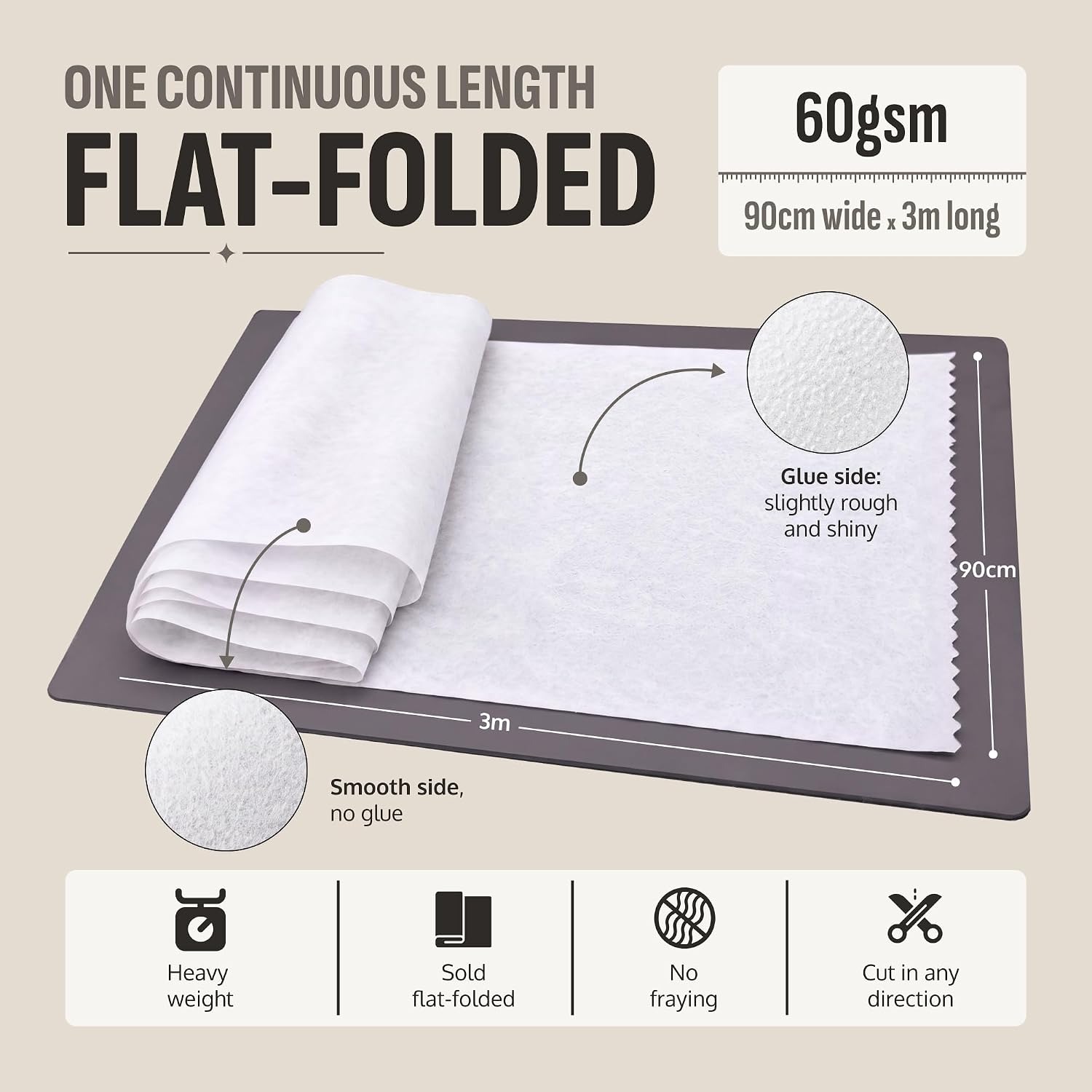
This heavy fusible interfacing is intended for a crisp, firm result. It is white, made from non-woven polyester and supplied as one piece measuring 90 cm wide by 3 metres long. It is a backing for structure, not a layer of soft padding.
The main question is whether that firm finish suits your project. More support is useful in some places, but it can change the feel of a fabric more than you expect. Start with the result you want, then choose the backing.
What heavy interfacing changes
Interfacing sits behind the outer fabric. In a finished project, its job is usually felt rather than seen. It can help a shaped section feel more defined or give a soft piece of cloth enough body for a structured design.
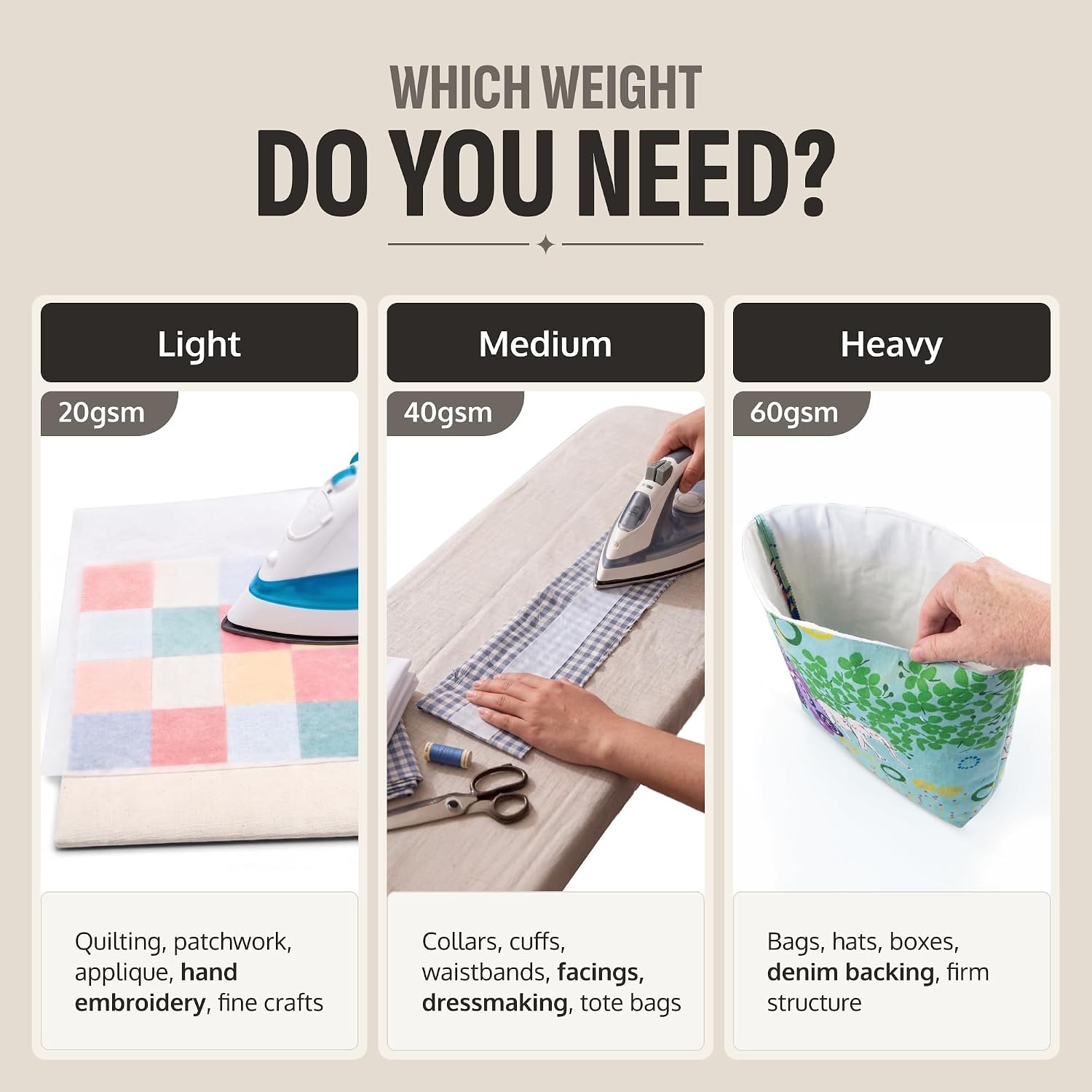
Heavyweight fusible interfacing is worth considering for purses, hats, fabric boxes and other projects where a soft drape is not the aim. The maker's description also suggests belts, tailoring details, aprons and cushions. That does not mean every part of those projects needs reinforcement.
Think about the exact area you want to change. A garment might need support only at a collar or waistband. A craft project might need backing across a larger panel. Follow your pattern's instructions where available, and check that it calls for a heavy rather than a lighter interfacing.
What comes in this pack
You receive one pre-cut piece, 90 cm wide and 300 cm long. Those measurements matter when you are planning larger panels or several smaller pattern pieces.
Before buying, lay your pattern pieces within a 90 cm-wide space. Work out how much length the layout takes, using the cutting instructions for your project. Remember to allow for any test pieces you want to make before starting.
The product details list an item weight of 160 g. Treat that as the listed item weight, not as a measurement of fabric density. It does not tell you how stiff your chosen outer fabric will feel after bonding. A fused sample is a more useful guide to that.
How the iron-on backing works
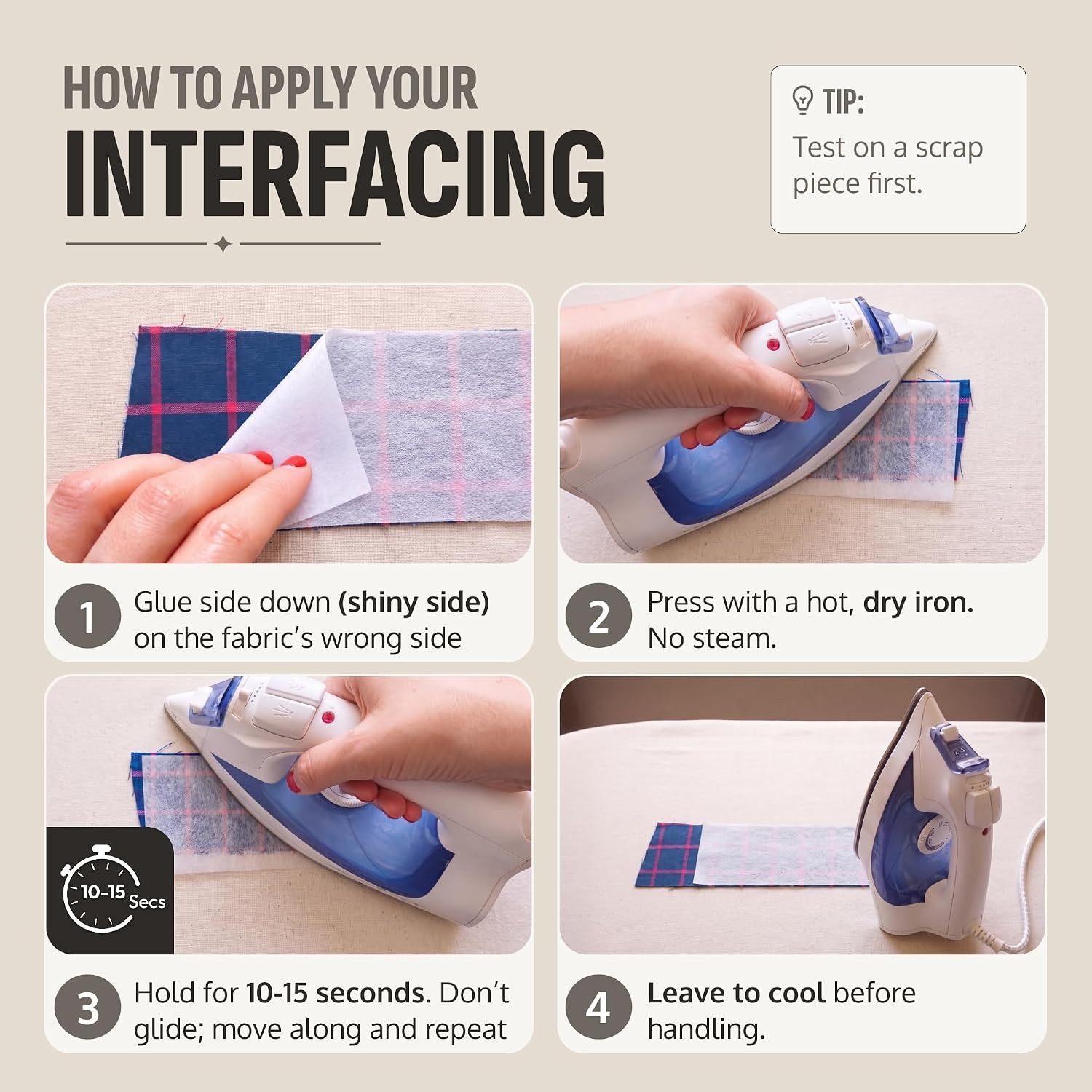
This is single-sided fusible interfacing. One side bonds to the wrong side of the fabric when heat and pressure are applied. The supplied guidance describes that adhesive side as rougher and slightly shiny.
Identify the correct side before bringing the iron near it. Place the adhesive against the fabric, not against the iron. Take time to check the arrangement, especially when working with pale materials where the two sides may be less obvious.
The supplied method calls for a hot dry iron held firmly in one place for 10 to 15 seconds. Do not slide the iron or use steam. Move to the next area and repeat, then let the fabric cool before handling it.
An exact iron temperature is not stated. Your outer fabric must be able to tolerate the application method, so check its care information and test an offcut first.
Make a small sample before committing
A sample answers questions that a product description cannot. It shows how the backing changes your particular fabric, whether the white layer affects its appearance and whether the finished feel matches your plans.
Use an offcut of the actual project fabric. Fuse a small piece of interfacing using the supplied method, then leave it to cool. Handle it as you would the finished item. Fold it, look at the surface and compare it with the unbacked fabric.
If the project will be washed, test the sample's care routine too. Machine washing is listed for this product, but no temperature or drying method is given. The outer fabric and other parts of the project may have stricter limits.
This extra step is especially useful for a visible garment detail. A finish that works well inside a purse may feel too stiff at a neckline.
Choosing it for garments
A fabric stabiliser for dressmaking should support the design without working against it. Heavy backing can suit a firm collar, cuff or waistband, but it is not the right choice simply because those parts often use interfacing.
Look at your pattern first. Does it ask for a crisp result or a soft one? Is the outer fabric sturdy, or does it move freely? A heavy backing can change the drape, so it deserves a careful test on softer cloth.
For collar and cuff interfacing, compare a fused sample with the rest of the garment fabric. You want a deliberate difference in structure, not an unexpected one. If you are using waistband interfacing, also consider how the backed section feels when folded into its finished shape.
Choosing it for bags and accessories
Interfacing for bag making often has a different job from backing in a flowing garment. A purse panel or belt may benefit from a more defined shape, making this heavy option worth considering.
Still, a backing is only one part of the construction. Do not assume that a fused fabric will hold a particular shape without the seams, lining or other support called for by your pattern. Check the design's material list before making substitutions.
When choosing interfacing for purses, make a sample large enough to judge the feel of the combined layers. If the design includes folds or several seam layers, think about those areas too. The result should suit both the finished shape and the way you plan to sew it.
Hats, costumes and fabric crafts
Caps, millinery and fascinators appear among the suggested uses. Interfacing for hats can help give fabric a firmer character, but different designs call for different levels of support. Use your pattern to judge whether this backing fits the job.
Costume interfacing can be useful where a detail needs more definition. Test the backed fabric in the position it will sit, rather than judging only a flat sample on the table. Movement and folds can change how that firmness feels.
For home crafts, the suggested uses include bunting, cushions and fabric boxes. Decide which sections need structure and which should stay soft. A cushion project, for example, may call for support in a decorative detail rather than across every surface.
Using it around embroidery
The maker suggests iron-on embroidery backing as a possible use. That is a reason to test it, not a promise that it suits every machine, stitch design or fabric.
This product is not described as tear-away or wash-away stabiliser. Do not choose it for a project that depends on removing the backing in either of those ways. Check your embroidery instructions for the required stabiliser type.
Try the planned stitching on a fused sample before starting the main piece. Look at both the surface and the feel of the fabric after stitching. If the backing gives more firmness than you want, reconsider it before committing a larger area.
Care and storage
The product details say machine wash, but they do not give a wash temperature, tumble-drying setting or full care routine. Avoid treating that short instruction as permission to use any wash cycle.
Care for the finished item according to all its materials. The outer fabric, trims and other components may set the limit. A tested sample is helpful when deciding how to clean something you have made yourself.
Store unused pre-cut interfacing somewhere clean and dry, away from direct heat. Keep any application directions with it. Label smaller offcuts so you can identify the weight and type when you return to them for another project.
Check suitability before cutting
It is worth checking the pack and your project plan before making the first cut. If something seems wrong, raise it before using the material.
For change-of-mind returns, the stated period is 14 days from delivery. Fabric must be unwashed, uncut, unused and in its original packaging, with return postage paid by the customer. Faulty or wrongly described goods are put right free of charge.
A delivery lead time is not specified by the maker. Check the delivery information for your address if the interfacing is needed for a class, gift or project deadline.
The short version
Choose this white non-woven fabric backing when you need firm support and your fabric can tolerate an iron-on application. The pack contains one heavy pre-cut piece measuring 90 cm by 3 metres.
Plan the layout, check your pattern and test the bond on scraps. Let the sample cool before judging it. Those simple checks help you decide whether this interfacing gives your project the shape and feel you want.