
The complete guide
Choosing Linen Fabric Pieces for Your Next Needlework Project
Small stitching projects can leave you with an awkward choice. A full length of fabric may be more than you need, while scraps from earlier work may be too small for the design you have in mind. Pre-cut squares give you a clear starting size, so you can work out what fits before you thread a needle.
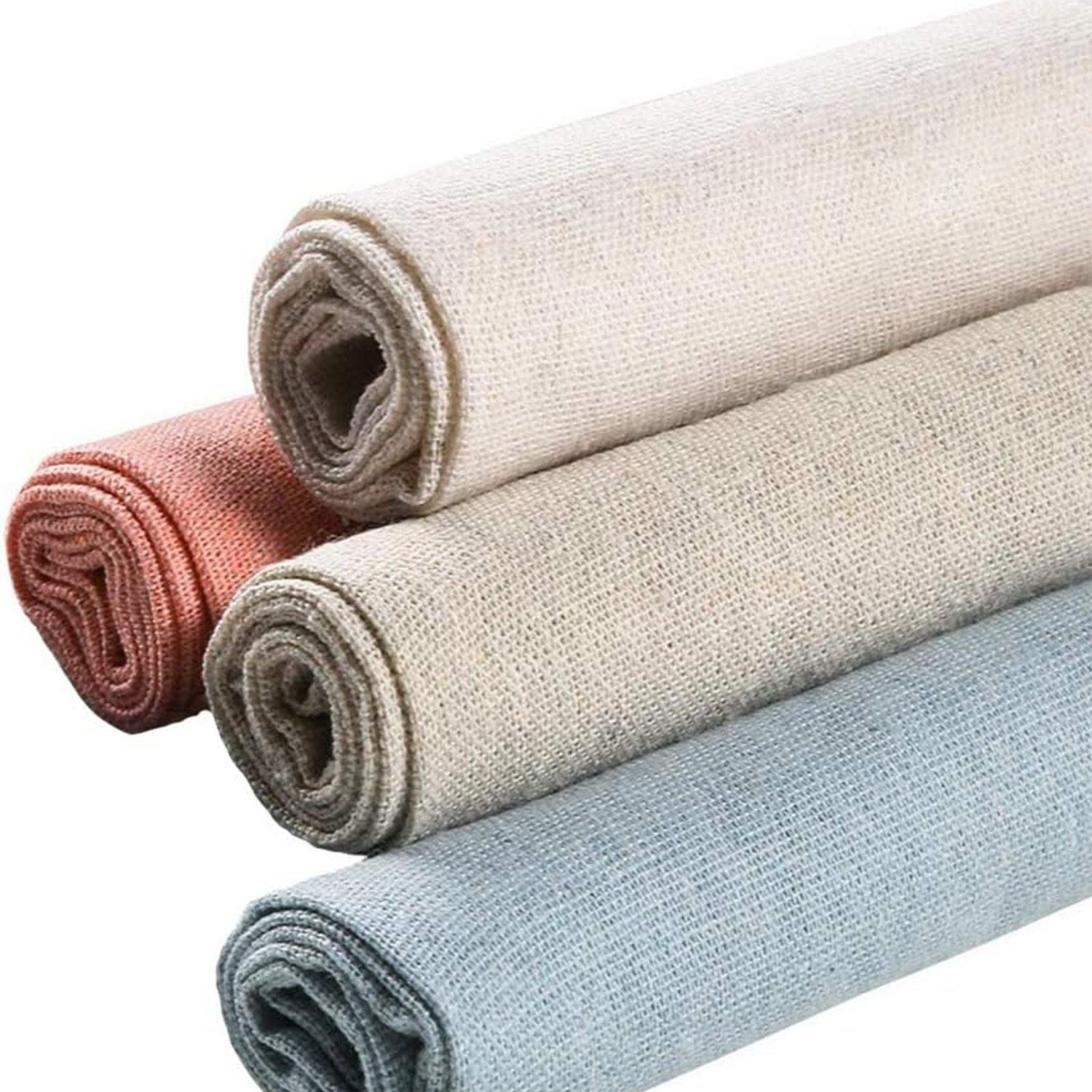
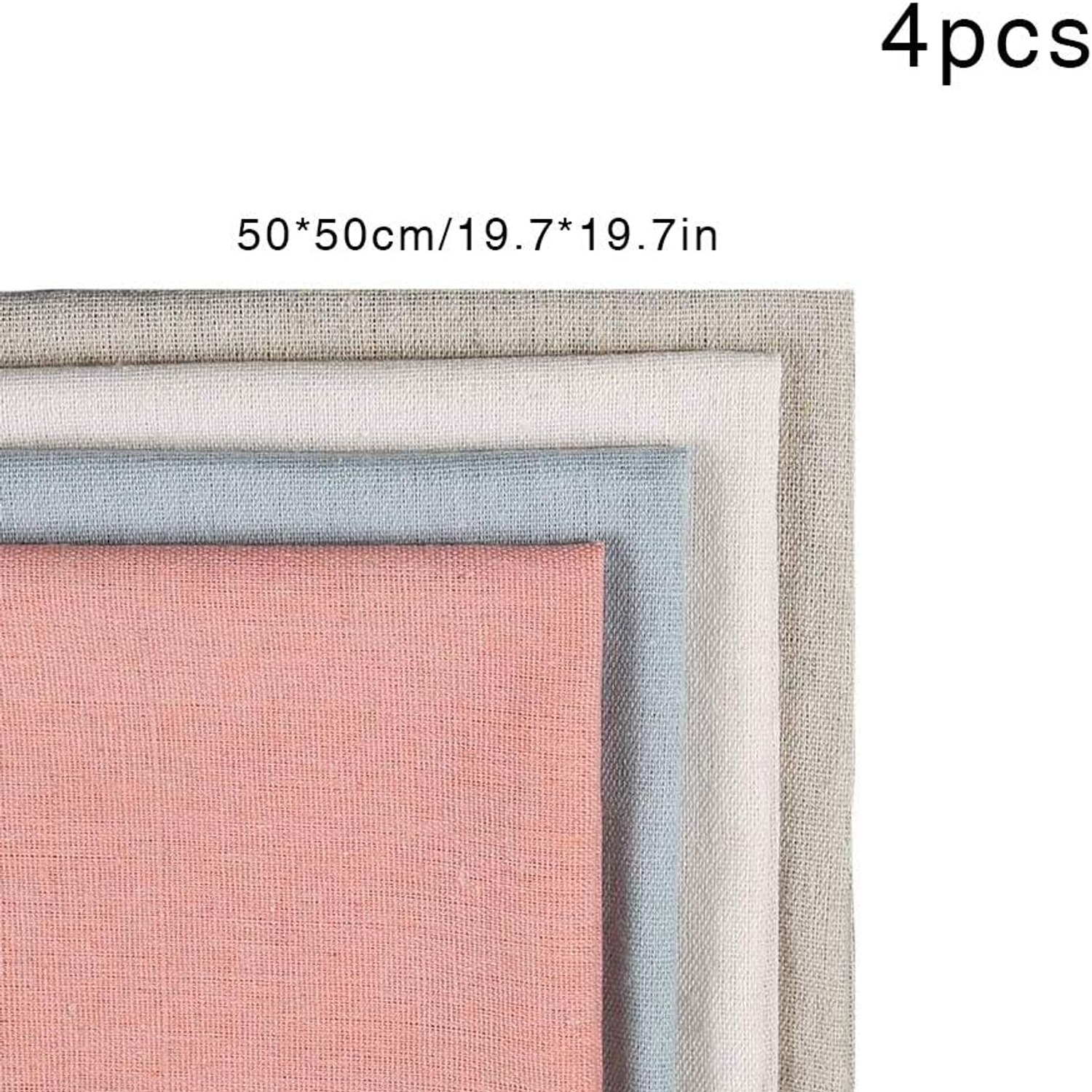
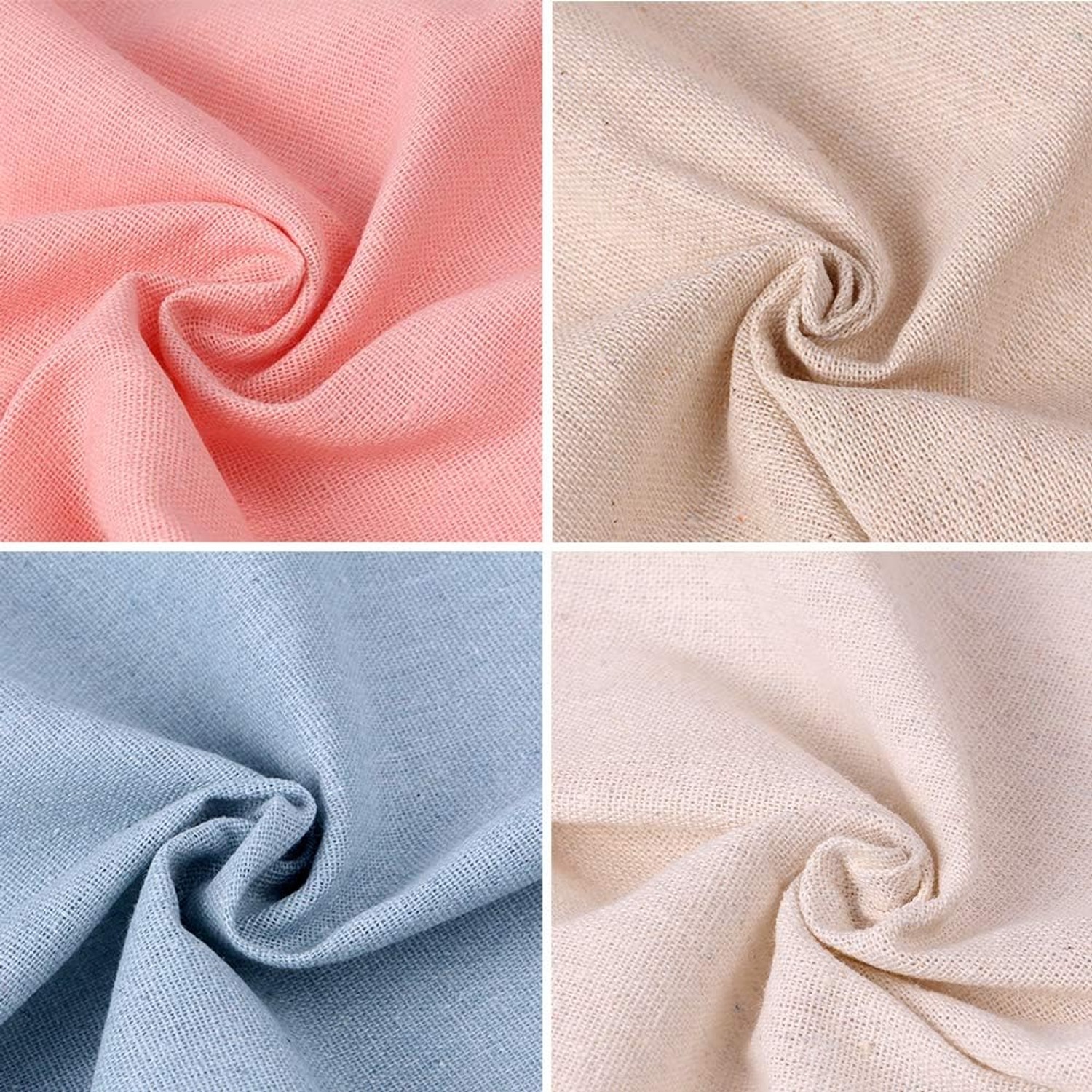
This pack contains four linen fabric pieces in four colours. Each square measures 50 x 50 cm. They are intended for needlework, embroidery and craft sewing, with a solid pattern that leaves the design work to you.
The useful question is not just whether you like the fabric. It is whether its size and stated details match the project you want to make. Here is how to decide.
Start with the project, not just the cloth
Think about the finished item first. A small stitched picture needs room around the design for holding and finishing. A pouch needs separate parts and seam allowances. A decorative panel may need extra fabric at the edges so it can be attached to another item.
Draw the required shapes on paper before cutting. Include every part, not only the visible front. It is easy to forget a back panel or the extra cloth needed for a folded edge.
For a first project, keeping one square intact gives you more freedom to move the design. You can trim it later, once you know how you want to finish it. Cutting first may leave too little room for a hoop or hem.
What the four-piece format gives you
A four-colour fabric pack lets you keep projects separate. You might use one piece for a finished design and another for testing stitches. Or you could plan a series of related motifs, with each colour providing a different background.
The pieces are pre-cut. They do not arrive as a continuous length, and they are not cut to your requested dimensions. That matters if your pattern needs a long strip or a large unbroken panel.
For smaller work, separate squares can be convenient. You can take out one piece without handling all the fabric, and reserve the others for later. Keep the unused pieces together so they stay easy to find when you return to the project.
Understand the material details
The maker lists the material type as linen. A separate fabric type entry lists cotton and linen. It does not give fibre percentages, so you should not treat that as a confirmed pure-linen composition.
The weave is described as plain/linen, and the pattern is solid. Thread count, fabric weight per square metre and weave spacing are not stated. The listed item weight of 190 g does not tell you the weight per square metre.
These gaps matter most when a pattern calls for a precise fabric specification. If you need a set fibre blend or a certain weave count, ask for that information before buying. For less exacting decorative work, a small test can help you decide how the fabric behaves with your chosen stitches.
Choosing fabric for hand embroidery
When choosing fabric for hand embroidery, consider the relationship between the background and the thread. A stitched line should be easy to see unless you are deliberately aiming for a low-contrast effect.
This pack offers four colours, but the exact colour names are not stated. If you need to match an existing textile closely, confirm the colour details rather than relying on a general multicolour description.
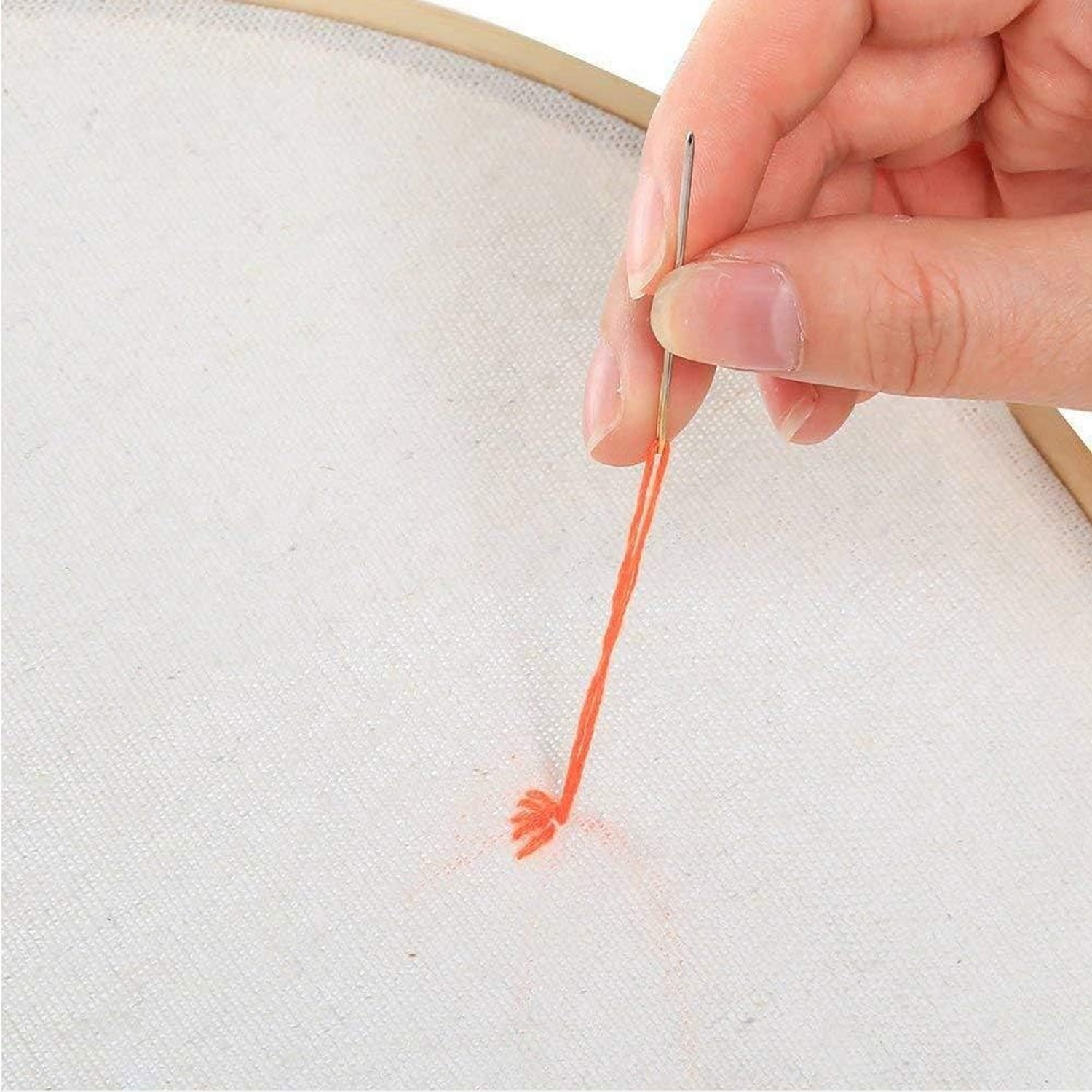
Once the fabric arrives and you have decided to keep it, try a few stitches in a spare area. Check whether the needle passes through comfortably and whether your thread creates the coverage you want. A small trial is easier to change than a half-finished design.
Check counted designs with care
Needlework linen fabric and counted cross-stitch fabric are not automatically interchangeable. Counted designs depend on the spacing of the fabric threads or holes. That spacing affects both stitch placement and finished size.
Although the maker mentions cross stitch, it does not state a fabric count. Do not calculate a chart's finished dimensions from the square size alone. The outer dimensions tell you how much cloth you have, not how many stitches will fit.
If your chart requires a particular count, confirm that detail first. For an embroidery sampler fabric project based on freehand outlines, a missing count may be less important, but you should still test the design before filling a large area.
Make the square size work for you
Each piece measures 50 x 50 cm. Treat that as the total fabric available, not the finished size of a sewn item. Seams, hems and other finishing methods use some of that area.
Hoop-based work also needs spare cloth outside the stitched section. Check that your hoop can hold the fabric while leaving the intended design in a useful position. A motif placed too close to an edge can become awkward to stitch.
For several small parts, make a paper layout. Place the largest shapes first, then see whether smaller details fit around them. Leave a useful test scrap if possible. It can save you from trying a new setting or marking method on the finished piece.
Think beyond framed embroidery
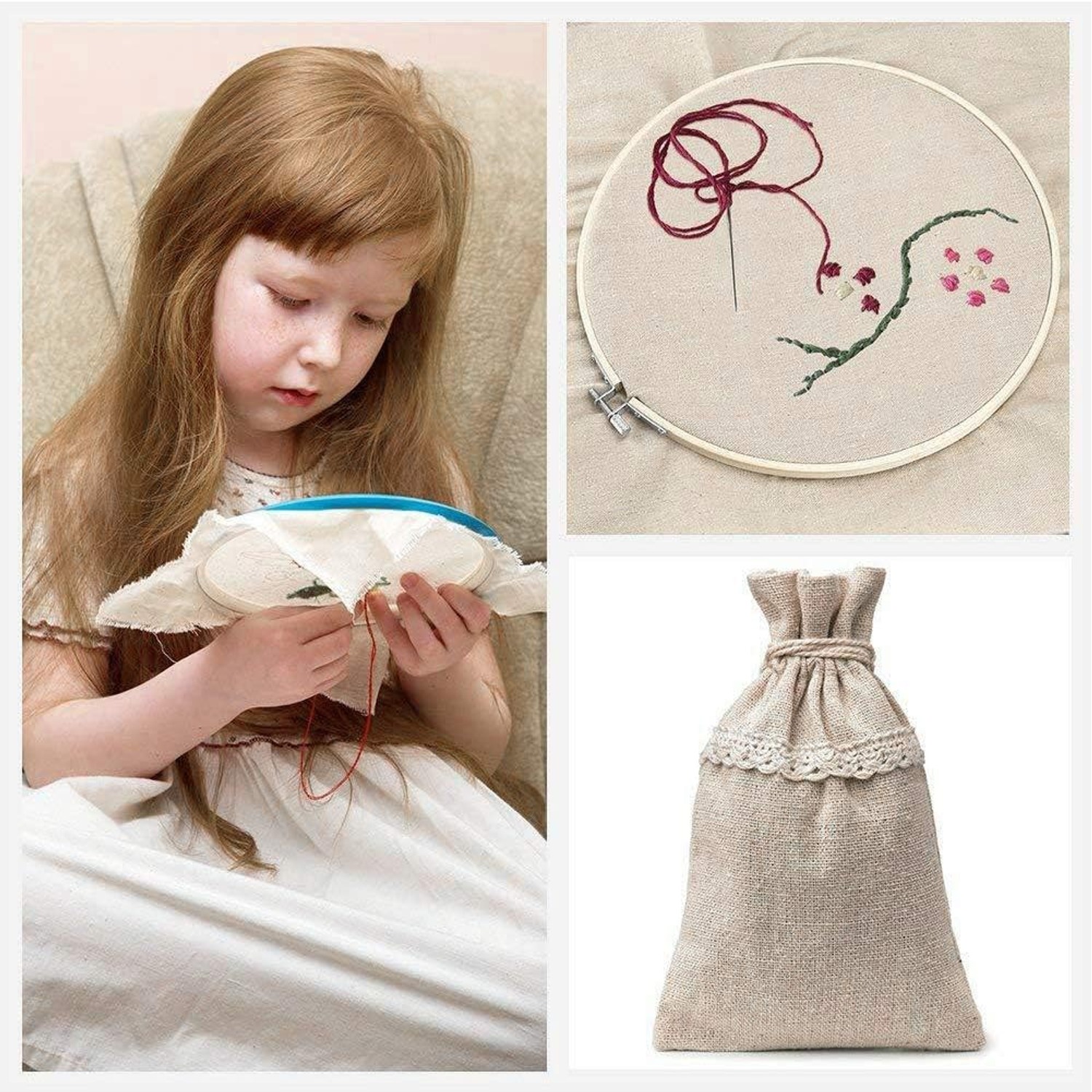
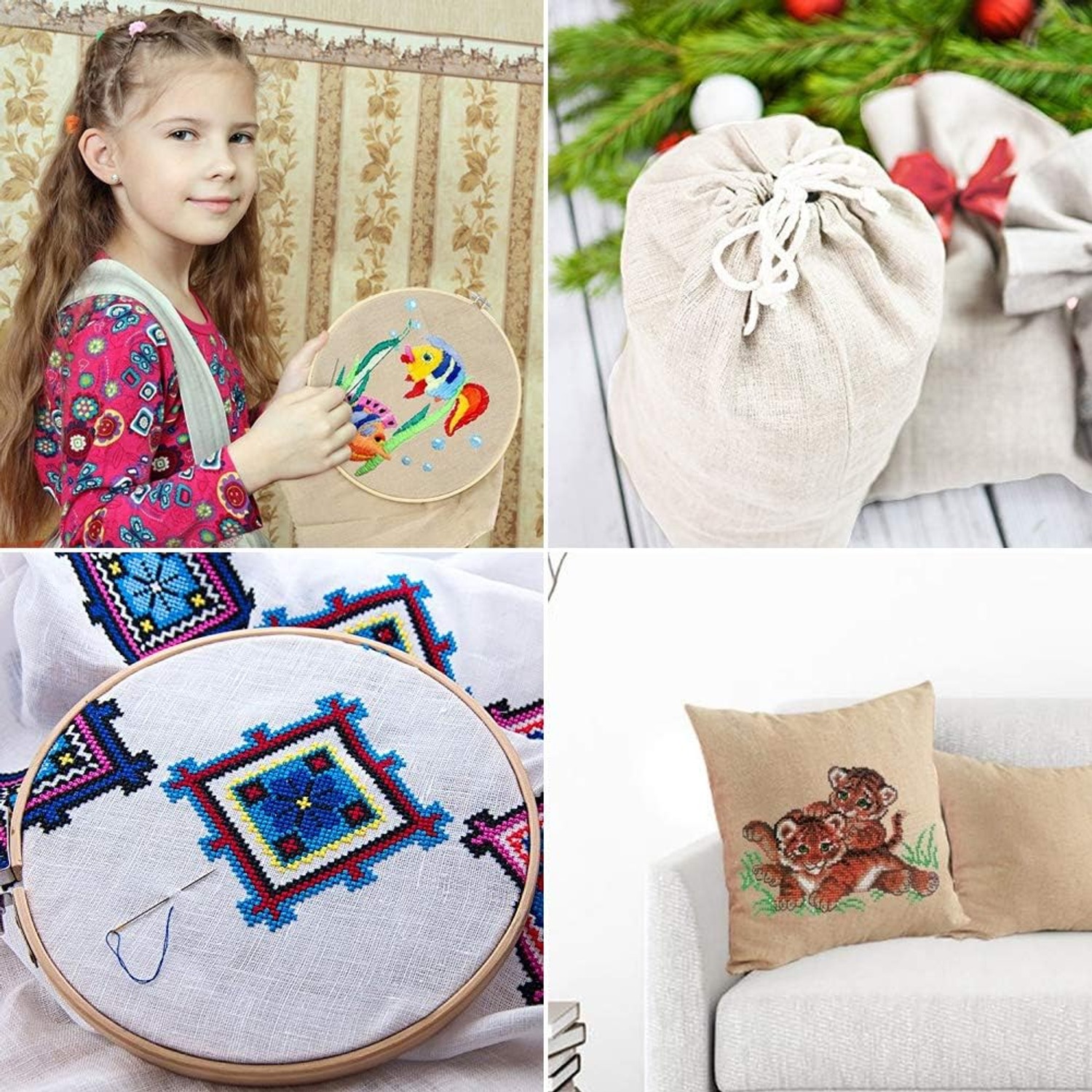
Small sewing project fabric can have several roles. A stitched panel could become part of a pouch, a decorative patch or a larger fabric assembly. The maker's description also mentions bags, pillow-related crafts and table coverings.
Those uses still need sensible planning. A bag may need lining or reinforcement, depending on its design and purpose. A cushion cover needs front and back pieces that fit its insert after seams are sewn.
A full-size curtain or large tablecloth cannot come from one 50 x 50 cm square. Joining pieces may be possible for your design, but it changes the look and adds seams. Work out those joins before treating a small pack as a substitute for continuous fabric.
Set up before making permanent changes
Inspect the pack before you wash, mark or cut it. Check the number of pieces, their colours and the size against what your project needs. Keep the original packaging while you make that decision.
This is also the time to review anything still unknown. If exact fibre content or colourfastness is essential, do not assume the answer. Get the missing detail before making a permanent change.
Once you are ready to begin, lay a piece flat and mark your layout with care. Test any marking method on a spare area first. The same applies to machine settings and unfamiliar threads. Preparation may feel slow, but it can prevent a much longer round of unpicking.
Care for the fabric and the finished work
The stated care instruction is hand wash only. No wash temperature, ironing setting or tumble-drying method is provided, so avoid adding those assumptions to your care plan.
Your finished project may include more than this fabric. Embroidery thread, lining, trims and transferred marks can all affect how it should be cleaned. Test them together before washing an item you have spent time making.
If you choose to wash before sewing, inspect the fabric and decide whether to keep it first. Washed fabric does not meet the stated change-of-mind return conditions. Shrinkage figures are not given by the maker, which is another reason to plan carefully when exact finished dimensions matter.
Store unused pieces clean and dry. Keep them away from direct sunlight and protect unfinished edges from catching on tools or fastenings.
Buying for someone else
Fabric for handmade gifts can mean two different things. You may want to make a gift yourself, or give the unused pack to someone who enjoys sewing. In either case, knowing the recipient's interests helps.
For a keen embroiderer, separate colours can offer room to try different designs. For someone just starting, remember that the stated contents are fabric pieces, not a complete kit. Thread, needles, a pattern and other tools are not listed as included.
If you are making something for a fixed date, check delivery information before ordering. The maker does not supply a delivery lead time, so leave time for both arrival and the stitching itself.
The short version
Choose this pack when four separate 50 x 50 cm pieces fit your plan. The solid colours offer backgrounds for embroidery, practice stitching and small sewing projects. Check any pattern requirements that depend on fibre content, weave count or exact colour before buying.
Inspect the fabric before washing or cutting. Returns are available within 14 days of delivery for unwashed, uncut, unused fabric in its original packaging, with the customer paying return postage. Faulty or wrongly described goods are put right free of charge.
Start with a measured layout and a small stitch test. Those two steps give your project a more considered beginning.