

The complete guide
A Buyer's Guide to Upholstery Dust Cover Fabric
A torn cover beneath a chair or sofa can make sound furniture look neglected. You may notice loose fabric hanging near the legs, or see webbing and springs when you move the piece. The visible upholstery can still be in good shape, even though the underside needs attention.
Dust cover fabric is made for this less visible part of a furniture repair. It covers internal components and helps protect the underside from dust. Before buying, the main questions are simple. Does the piece fit, is the furniture itself sound, and are the fabric details suitable for your project?
What an underside cover actually does
An upholstery dust cover sits beneath the furniture. Its job is different from the fabric you sit on. It provides a finishing layer that hides webbing, springs and the space inside the upholstered frame.
That distinction matters when deciding what needs repair. A new covering can tidy an exposed underside, but it cannot correct a sagging seat or a broken frame. If the furniture feels unstable, makes unfamiliar noises or has damaged supports, look into those problems before closing the underside.
Think of the cover as the final stage of the job. First check the structure and internal parts. Once any necessary repairs are complete, the covering can help leave the underside looking neat again.
What comes in this piece
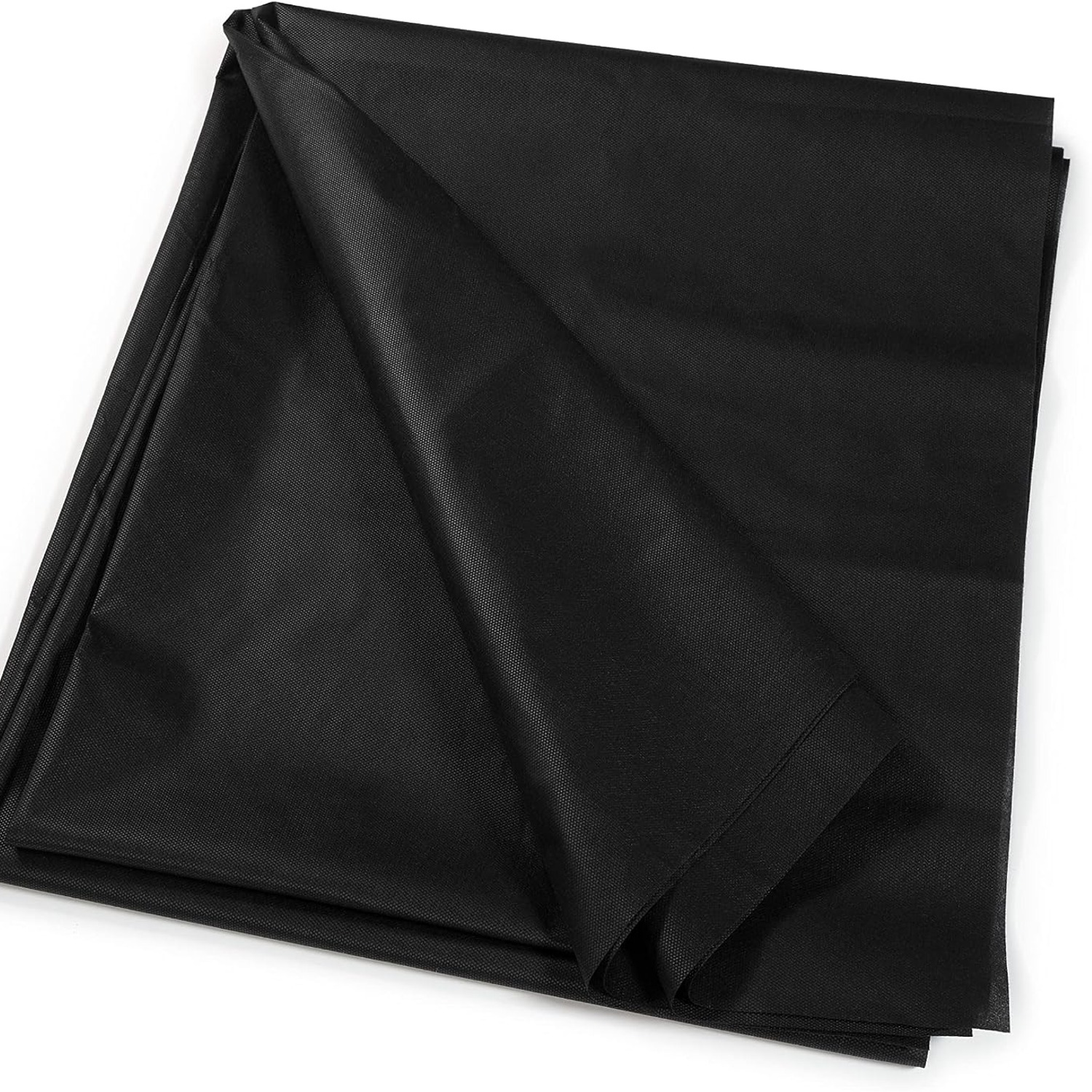
This is one piece of fabric measuring 91 cm (36 in) wide and 5 yards (4.57 m) long. It is supplied in that fixed size. There is no custom cutting service attached to this product.
The width deserves as much attention as the length. A long piece is not automatically suitable for a wide furniture base. If your required panel is wider than 91 cm after allowing for attachment, you will need to reconsider the layout or choose another size.
The listed weight is 200 g. Avoid using it to judge strength or compare technical performance with another fabric.
Check the details that matter to you
The maker contains conflicting material information. Polypropylene appears in one part, while acrylic appears elsewhere. An exact composition cannot be confirmed from those entries.
Colour information also differs. The product is described as charcoal, but a separate field says Multicolour. For an underside repair, colour may be less important than it would be for a visible seat cover. Even so, a buyer who needs a specific shade should ask for confirmation rather than rely on the product name alone.
These gaps are worth resolving before purchase if your project has strict requirements. Thickness, fire rating and country of origin are not specified. Nothing in the maker's description should be taken as proof that the fabric meets a particular furniture standard.
Who this fabric may suit
This type of chair underlining fabric is relevant when the existing cover is torn, missing or hanging loose, while the furniture beneath it remains serviceable. It can also be considered as the finishing layer after other upholstery work.
For a home repair, start by looking at the original construction. Is the underside a simple panel attached around a frame, or does it have openings and fittings that complicate the job? A straightforward shape is easier to measure than a base with several sections.
If you are repairing furniture for someone else, agree on the required finish and material before ordering. A hidden layer still needs to suit the task. Where a project has formal safety or performance requirements, seek documented specifications rather than making assumptions.
Measure the underside, not the seat
The dimensions of the seat cushion do not tell you the size of the underside cover. Turn your attention to the area where the replacement fabric will actually sit, including the frame edges used for attachment.
Measure both directions at more than one point if the shape is uneven. Then account for the material needed at each edge. That allowance depends on the furniture and fitting method, so there is no single extra amount that works for every chair or sofa.
Write the measurements down before shopping. For a replacement sofa bottom cloth, compare the whole required panel with the available 91 cm width. Do not count on stretching the fabric to make an undersized piece fit.
If the furniture is heavy or awkward, get help positioning it safely. Avoid resting it on parts that could be damaged, and take care around exposed fasteners.
Plan your cutting layout first
When several chairs need new covers, it is tempting to judge quantity by eye. A paper layout is more reliable. Draw a rectangle representing the supplied piece, then mark each required panel inside it.
Include your attachment allowances in every panel. Leave room for any shape adjustments you have identified during measurement. Several pieces may fit along the length, but their widths still need to work within the fabric's width.
Do not assume this piece will cover a particular number of chairs. Chair bases vary, and awkward shapes can leave unused sections between panels. Planning helps you see those limits before you make an irreversible cut.
For a single larger item, check whether you can make the required cover as one panel. If not, get advice on a suitable alternative rather than assuming a join will work for your furniture.
Inspect before fitting
Open the packaging carefully and check the fabric before cutting or washing it. Confirm that the supplied piece and its appearance match what you expected. Keep the packaging while you assess it.
This is especially important here because of the conflicting colour and material entries. If the fabric does not meet your requirements, pause and ask us for help. Cutting first makes it harder to resolve a simple suitability issue under the stated return conditions.
Next, inspect the furniture underside. Look for loose fixings, damaged frame edges or parts that may need professional attention. A fresh cover should not hide a problem that still needs repair.
Fit it to the furniture's construction
The right attachment method depends on the frame, the existing fixings and access to the underside. Tools and fasteners are not listed as included, so assess what the job needs separately.
If you remove an old furniture dust cover, work carefully around its fixings. Avoid pulling hard on fabric that is still attached. Exposed fasteners can be sharp, and careless removal may damage the frame surface you need for the new cover.
Aim for a tidy covering without using it to pull damaged parts into place. Keep clear of moving mechanisms and any areas that need access. If you cannot tell where attachment is safe, an upholsterer can assess the construction before you proceed.
There is no need to turn a modest finishing job into a larger repair through guesswork. Knowing when to ask for help is part of a good result.
Care after the repair
Washing instructions are not given by the maker, so do not assume this fabric can go through a washing machine or dryer. The maker's description also does not establish outdoor suitability or resistance to damp conditions.
For ordinary care, remove loose surface dust gently. Avoid pulling at the fabric while cleaning around furniture legs or the underside edge. If you notice a section coming loose, check the attachment rather than continuing to tug or brush over it.
Store leftover upholstery finishing fabric somewhere clean and dry. Keep a note of its dimensions so you know whether it could suit a later repair. Do not assume a small offcut will be large enough until you measure the next job.
Delivery, returns and your repair schedule
A confirmed delivery lead time is not provided by the maker. Check the delivery information when ordering, especially if you have arranged help or booked time to complete the repair. It is sensible to have the fabric in hand and checked before taking furniture apart.
For the Ireland store, the stated return period is 14 days from delivery. Change-of-mind returns require the fabric to be unwashed, uncut, unused and in its original packaging. The customer pays return postage.
Faulty or wrongly described goods are put right free of charge. If there is a problem, contact us before making changes to the fabric. Clear measurements and a check on arrival can help separate a sizing issue from a product-description issue.
The short version
This dust cover replacement is a fixed piece, 91 cm wide and 5 yards long, intended to conceal webbing and springs beneath upholstered furniture. It is a finishing cover, not a structural repair.
Measure the underside carefully, plan your layout and confirm any material or colour requirements before ordering. Inspect the fabric before cutting, then fit it using a method suited to your furniture. Those checks give a simple repair a much better chance of going to plan.